How Should Buyers Choose a Coffee Cup Making Machine?
A coffee cup making machine should be selected around the cups that customers repeatedly order, not around the largest machine specification available. Coffee shops, beverage distributors, bakeries, offices, convenience stores, and takeaway suppliers may all use paper coffee cups, but their requirements for cup size, printing, heat insulation, packing quantity, and delivery speed are different.
The machine is only the forming center of the business. The buyer also needs paper cup fans, bottom paper, printed designs, suitable coatings, molds, inspection, counting, packing, and finished goods storage. A profitable coffee cup project begins with a clear product and customer plan before the equipment list is confirmed.
This guide explains how startup factories, local distributors, and existing paper cup producers can plan a coffee paper cup machine investment. It focuses on customer demand, product mix, real production cost, and the choice between single wall and double wall coffee cups.
Which Coffee Cup Types Should the Business Produce?
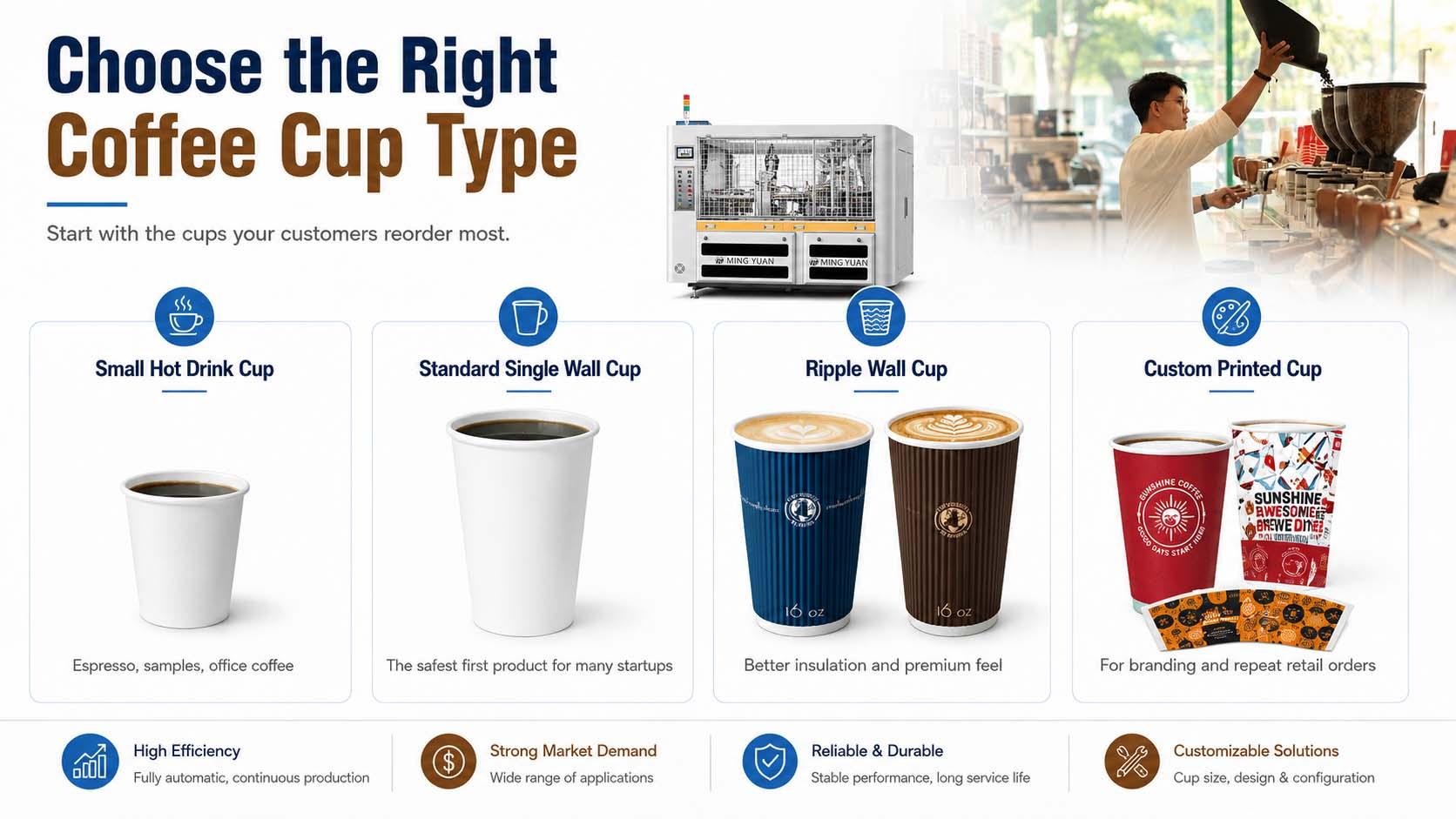
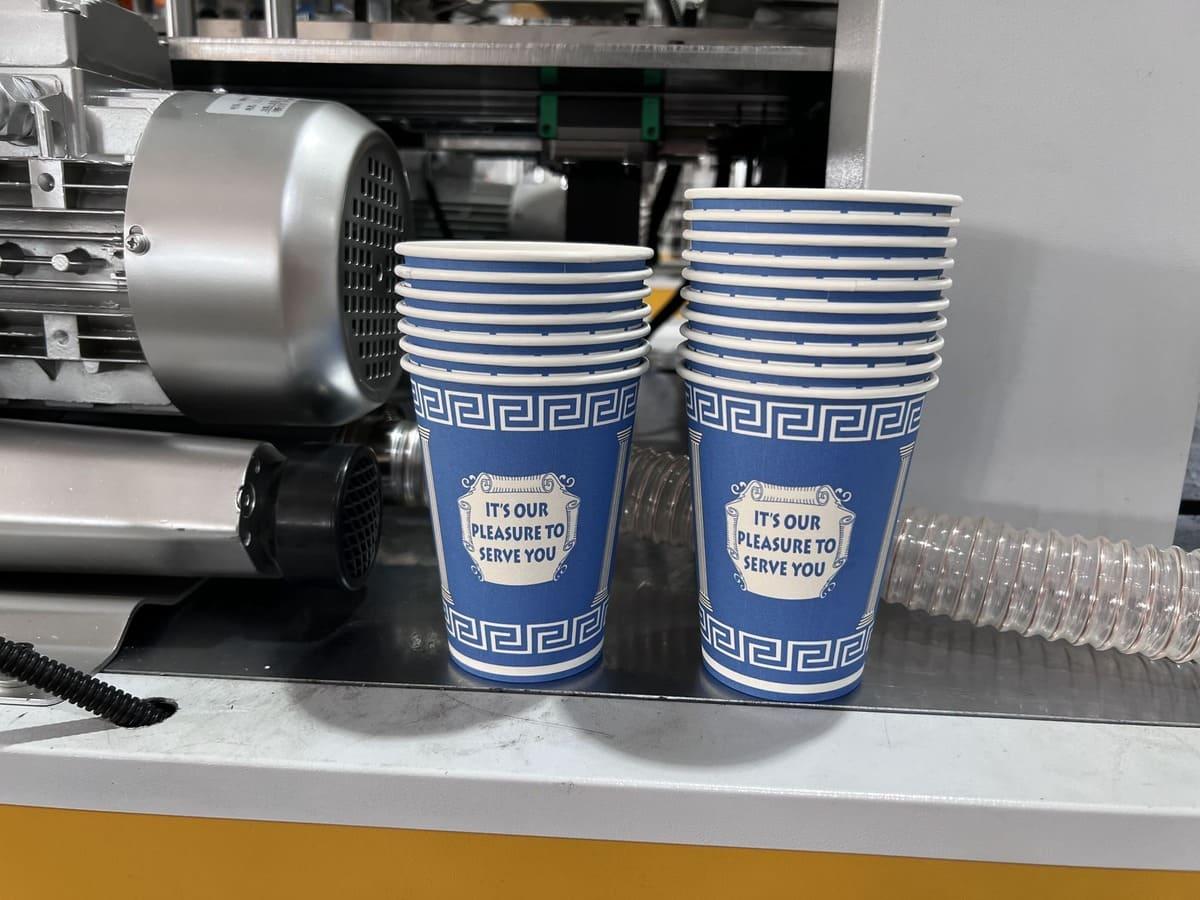
Coffee cup production is not one product. Buyers may need small espresso cups, standard hot drink cups, large takeaway cups, single wall cups used with separate sleeves, or double wall cups designed for improved heat insulation. Starting with too many formats can increase mold cost, paper cup fan inventory, printing complexity, and changeover time.
| Cup Type | Typical Buyer Need | Production Planning Point |
|---|
| Small hot drink cup | Espresso, samples, office coffee, and compact servings | Confirm local demand before adding a low-volume size. |
| Standard single wall cup | Coffee shops, vending, tea, and general takeaway drinks | Often suitable as the first repeated product for a startup. |
| Large takeaway cup | Large coffee, cold drinks, and beverage chains | Requires more material and may affect packing and carton volume. |
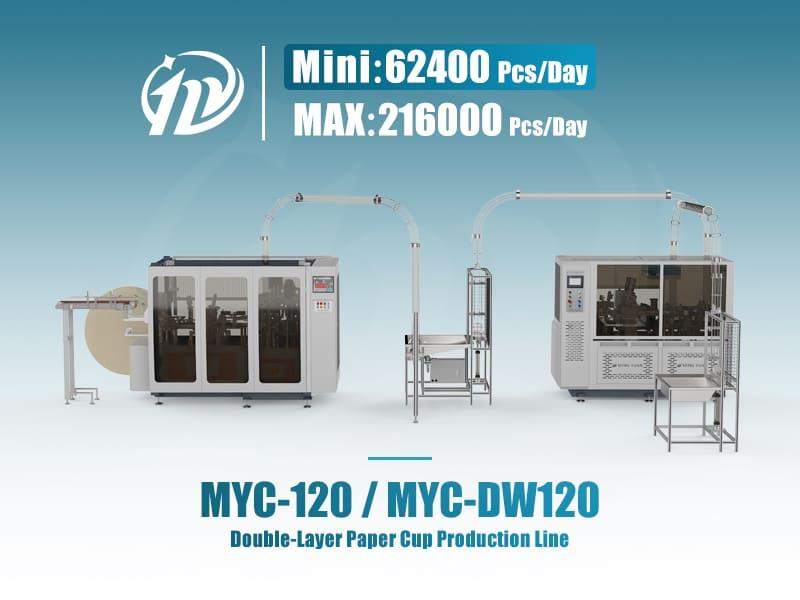
| Double wall coffee cup | Premium hot drinks and branded takeaway service | Needs an outer sleeve or wall process in addition to the inner cup. |
A startup should normally build reliable repeat orders around a limited number of cup sizes before expanding the product range.
What Should Buyers Learn From Target Customers First?
Before buying coffee paper cup production equipment, the buyer should interview potential customers and collect practical order information. A coffee shop may care about custom printing and small minimum orders. A distributor may care more about standard sizes, carton quantities, and delivery consistency. A beverage chain may require repeated designs and predictable quality.
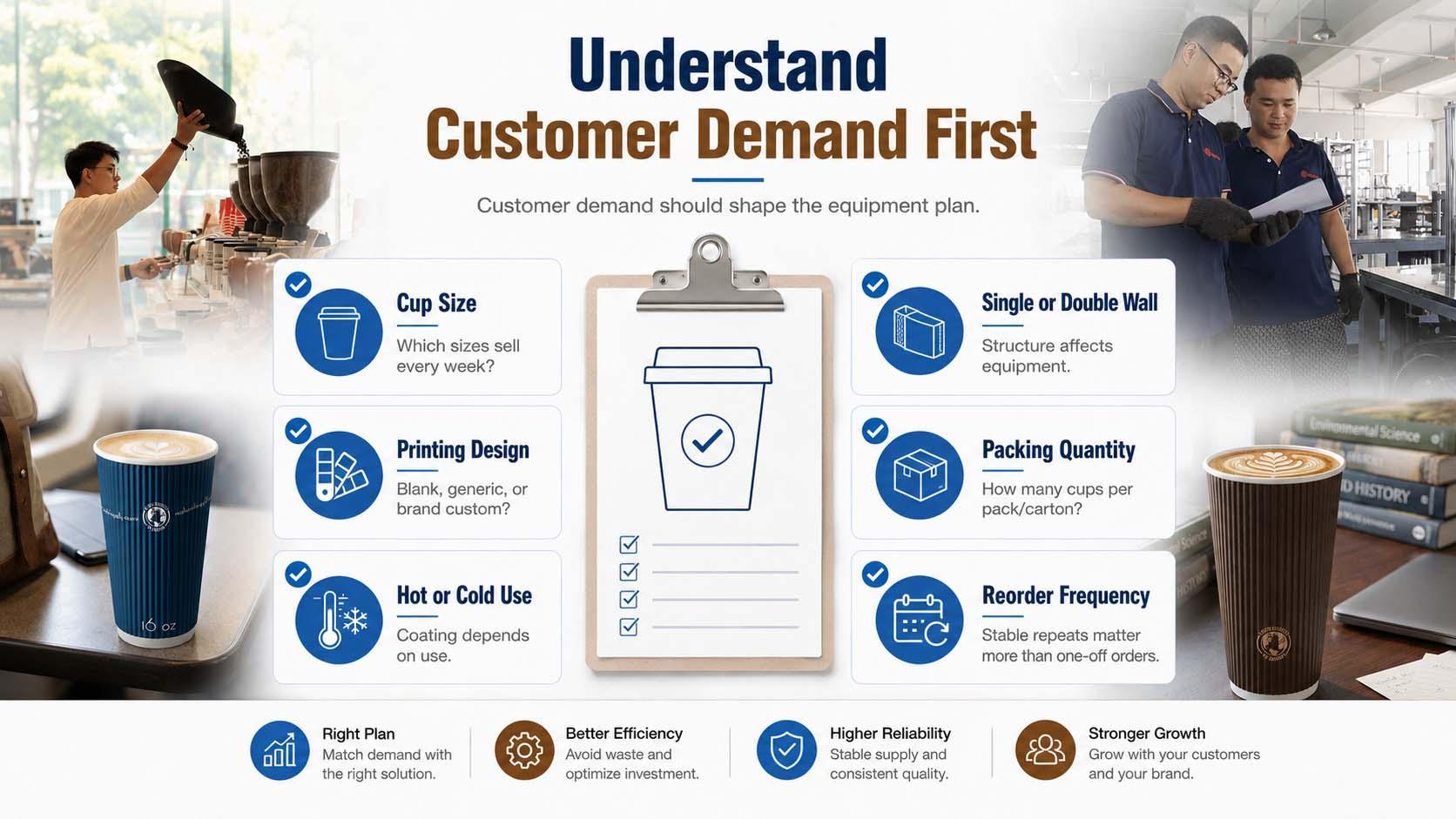
- Which two or three cup sizes account for most current purchases?
- Do customers prefer plain cups, standard printed cups, or custom branding?
- Are cups used for very hot drinks, general beverages, or both?
- Do buyers require single wall cups with sleeves or double wall cups?
- What quantity is packed in each bag and carton?
- How often do customers reorder, and how quickly must orders be delivered?
This information determines machine configuration, molds, material inventory, printing strategy, and packing requirements. Customer order patterns should define equipment capacity; equipment capacity should not define an imaginary market.
What Equipment Does Coffee Cup Production Require?
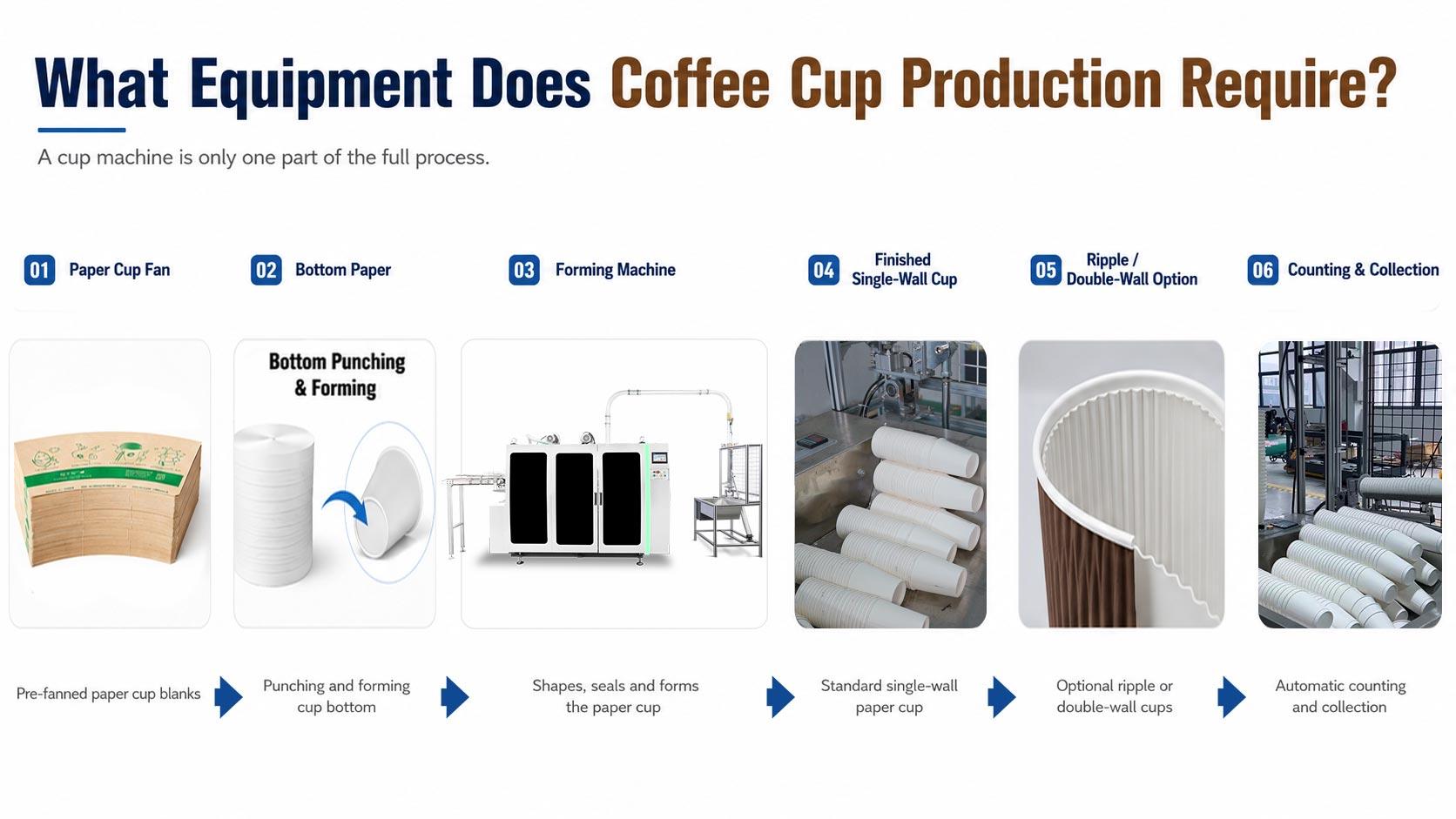
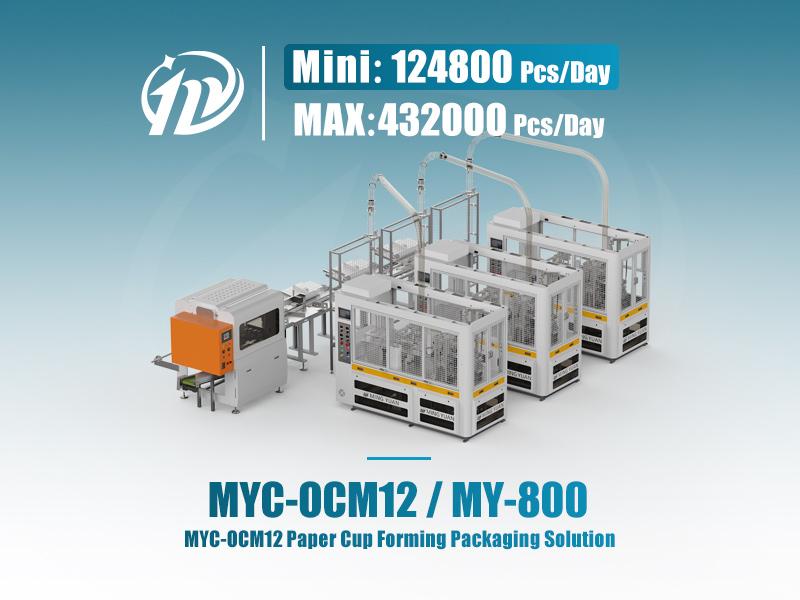
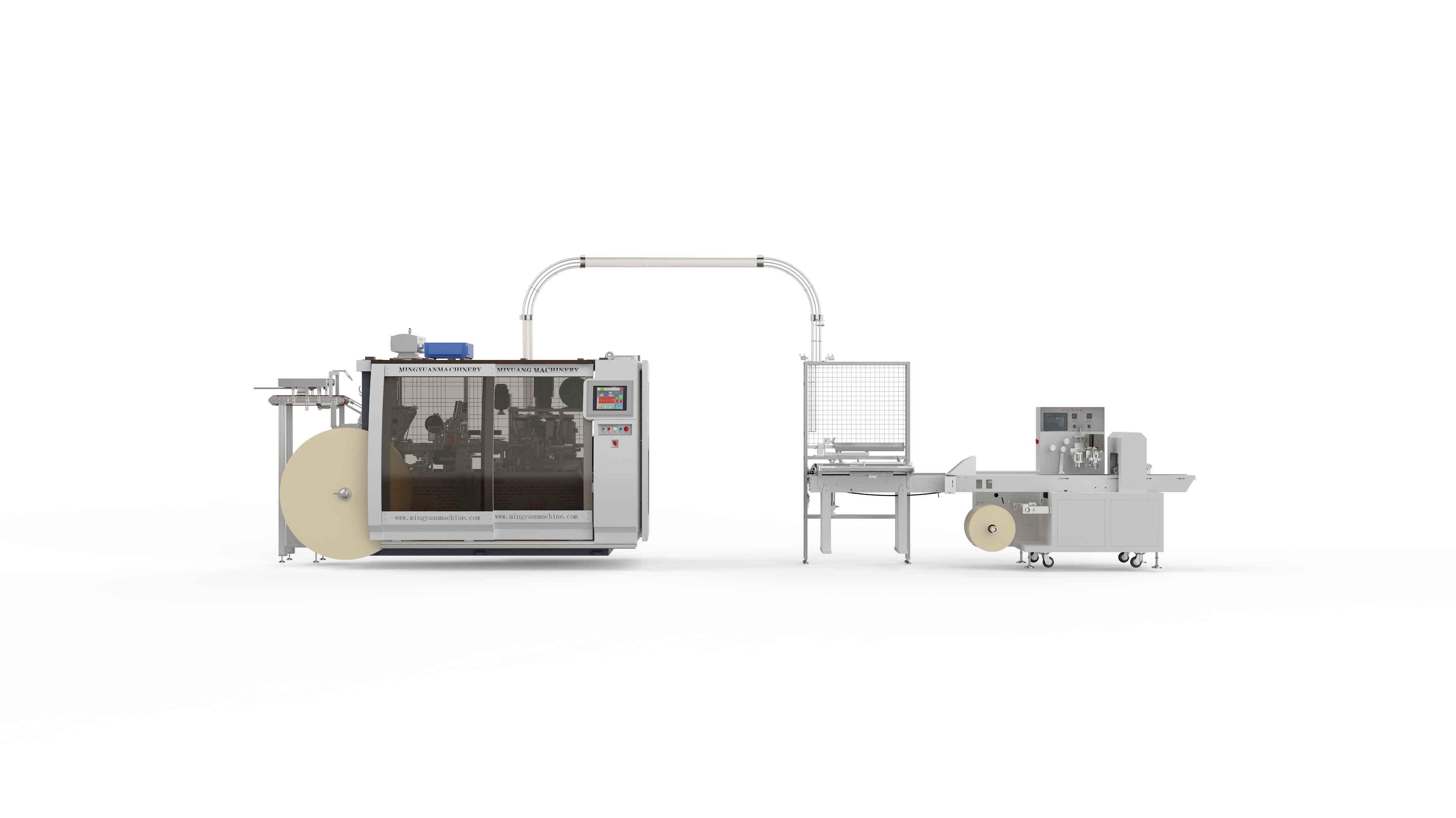
A coffee cup making machine forms the inner cup, but a complete production workflow may include several upstream and downstream stages. Buyers can outsource some stages at the beginning and add equipment when order volume becomes stable.
| Production Stage | Equipment or Resource | When It Becomes Important |
|---|
| Material supply | Printed or plain paper cup fans and matched bottom paper | Required from the first production run. |
| Printing | Paper cup printing machine or outsourced printing | Important when custom branded orders become frequent. |
| Die cutting | Paper cup fan die cutting machine or ready-cut fans | Useful when the factory needs greater fan supply control. |
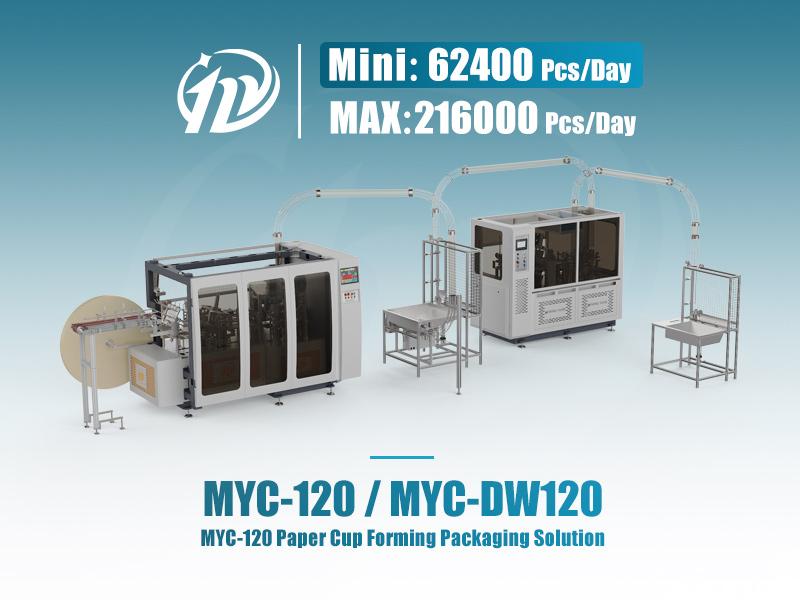
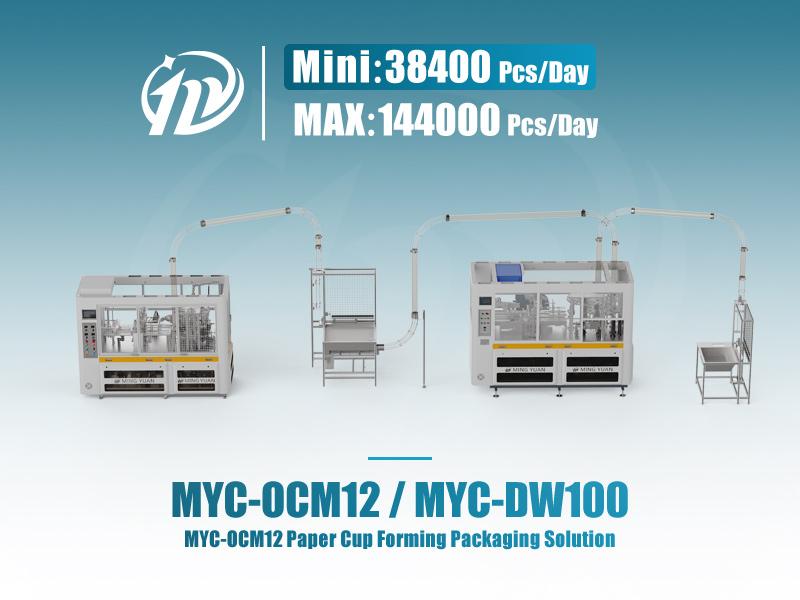
| Cup forming | Coffee cup making machine | Forms the sellable inner cup. |
| Outer wall | Double wall or cup sleeve equipment | Needed for double wall or ripple-style coffee cups. |
| Packing | Counting, bagging, sealing, and carton handling | Becomes critical when manual packing delays delivery. |
Single Wall vs Double Wall Coffee Cups
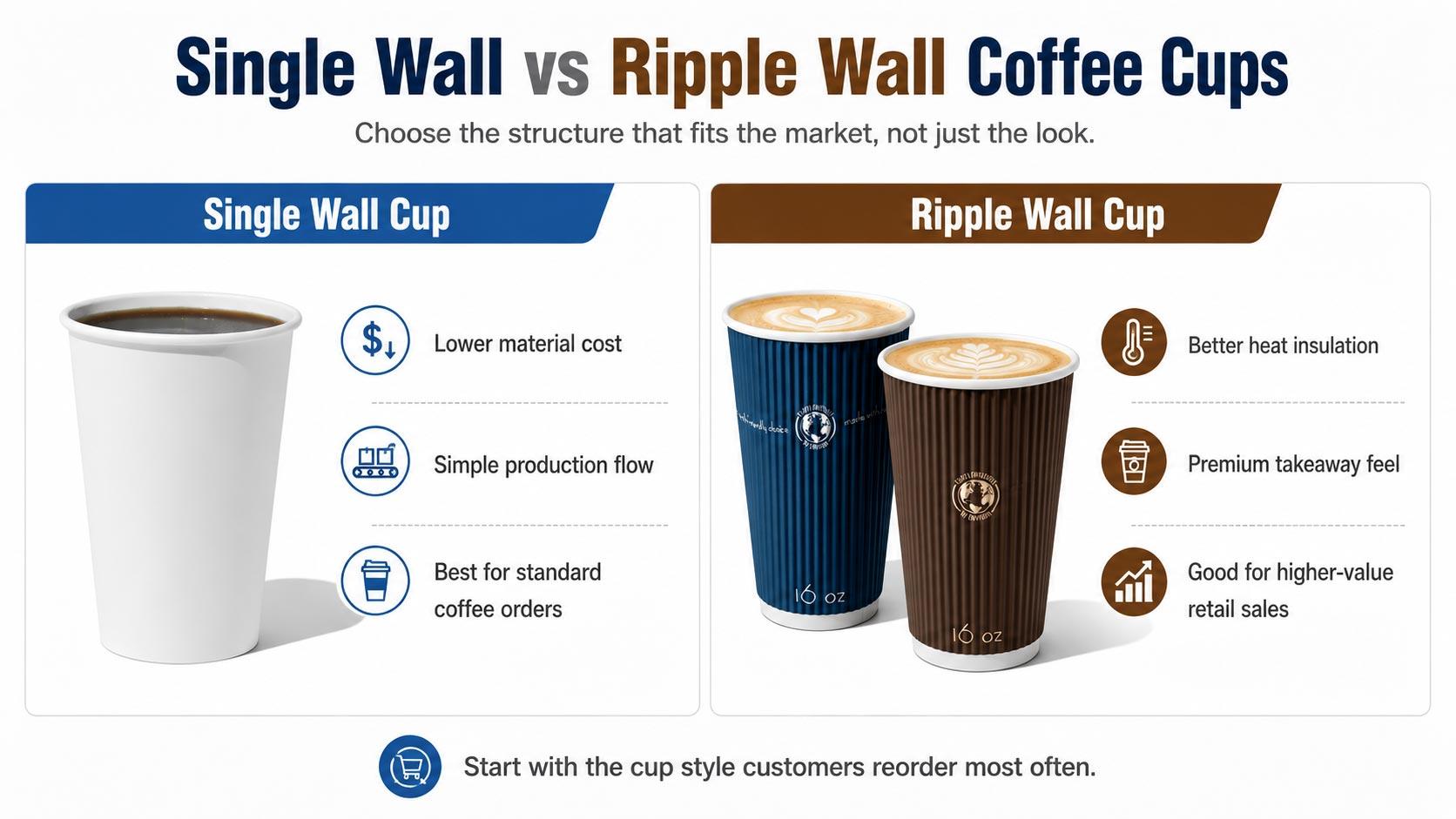
Single wall and double wall cups serve different price levels and customer expectations. A buyer should not assume that a premium cup automatically creates better profit. The selling price, material cost, extra equipment, production steps, and local demand must be considered together.
| Decision Factor | Single Wall Cup | Double Wall Cup |
|---|
| Production steps | One primary forming process | Inner cup plus outer wall or sleeve process |
| Material cost | Lower relative material use | Higher due to the additional outer layer |
| Market position | Standard coffee and beverage supply | Premium hot drinks and stronger branding |
| Startup suitability | Often easier for initial market testing | Best when premium demand is already visible |
The decision should be based on repeat customer demand and achievable selling price, not only on the visual appeal of the finished cup.
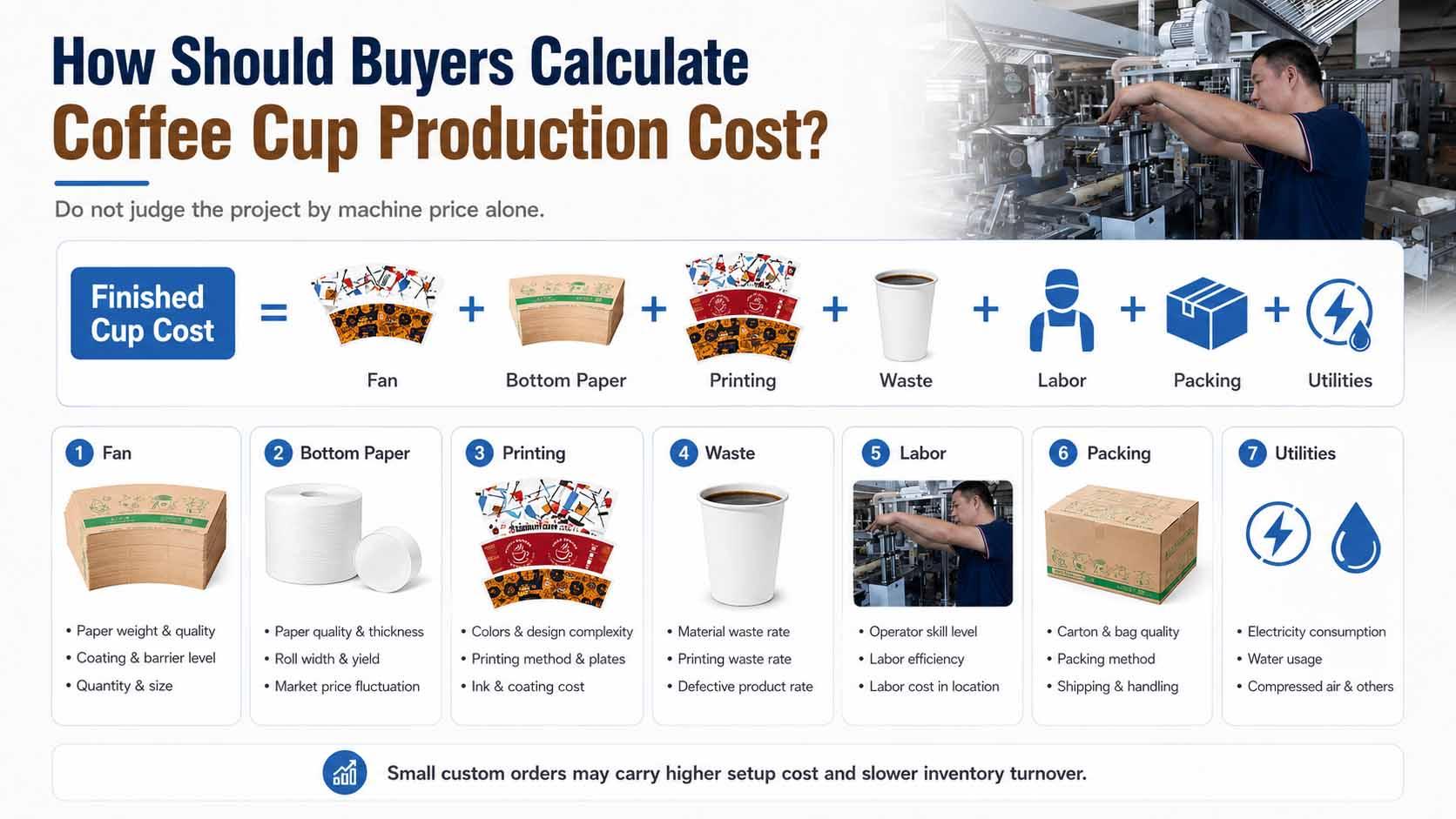
Machine price is only one part of the project. Buyers should calculate the cost of each sellable cup and the monthly cost of maintaining the selected product range.
| Calculation | Simple Formula | Why It Matters |
|---|
| Finished coffee cup cost | Fan + Bottom Paper + Printing + Waste + Labor + Packing + Utilities | Shows the cost of a sellable packed cup. |
| Real qualified output | Machine Speed x Stable Running Time x Qualified Rate | Prevents buyers from treating rated speed as delivered output. |
| Order contribution | Selling Price - Finished Cup Cost - Order-Specific Setup Cost | Helps compare standard orders with small custom designs. |
Small custom printed orders may have an attractive selling price but also create design preparation, material leftovers, changeover time, and slow-moving inventory. The buyer should calculate profit by order type instead of using one average margin for all coffee cups.
Inventory planning is especially important for coffee cup production because each cup size and design may require different fans, bottom paper, sleeves, bags, and cartons. A factory that accepts too many designs without minimum order rules can hold a large amount of material that cannot be used for another customer. Standard cup dimensions and a controlled design approval process make purchasing easier and reduce cash tied up in slow-moving stock.
For the first production period, buyers can separate products into three groups: standard cups kept in regular production, repeat branded cups produced according to customer forecasts, and special designs produced only after order confirmation. This approach connects material purchasing with real sales. It also helps the factory decide which cup sizes deserve dedicated molds, which printed fans should be kept in stock, and which orders require a longer delivery time. Good inventory control can protect profit as effectively as higher forming speed.
Recommended Setups for Different Buyer Scenarios
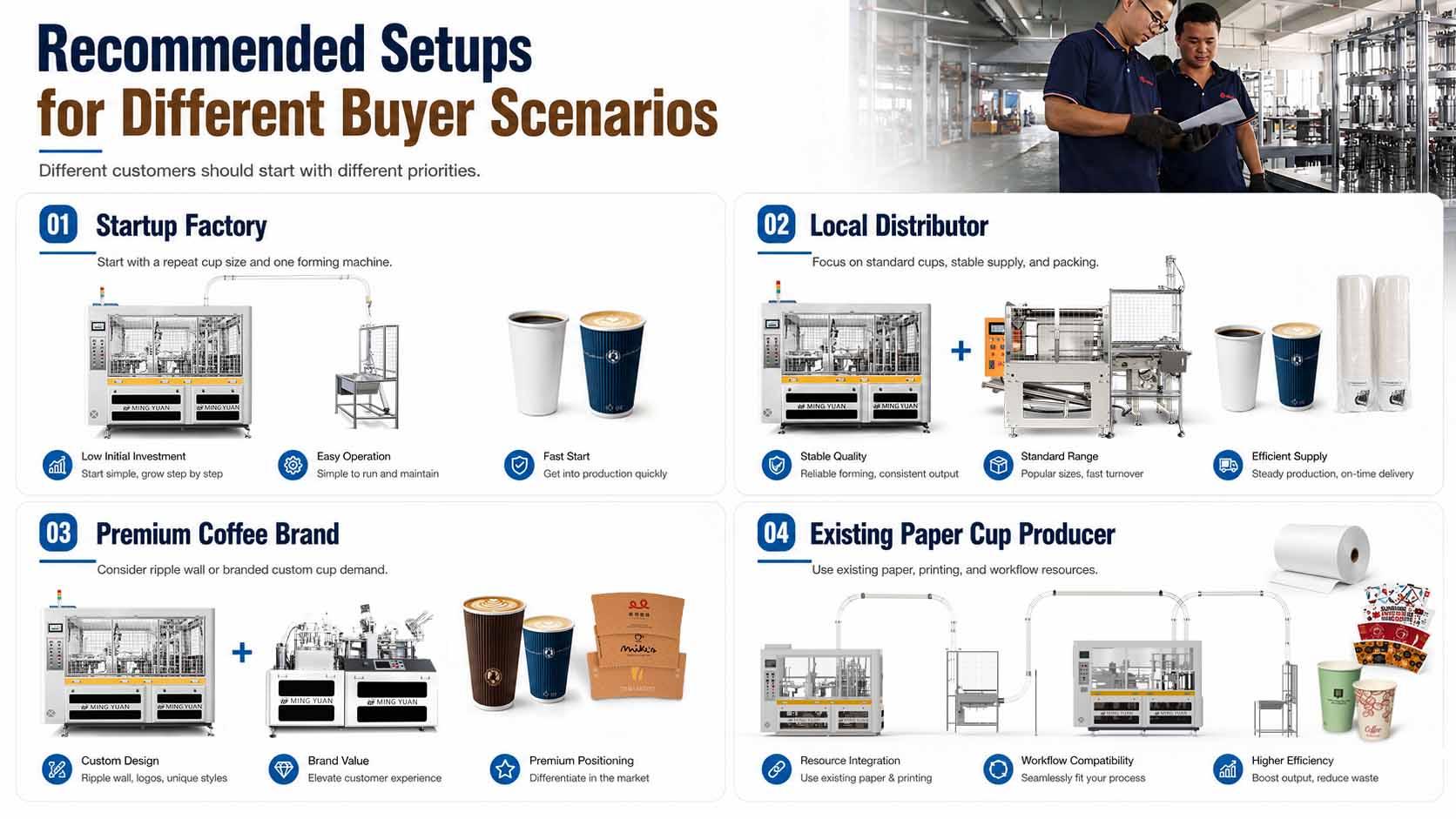
| Buyer Scenario | Practical Starting Setup | Upgrade Trigger |
|---|
| Startup serving local coffee shops | One forming machine, limited cup sizes, outsourced printed fans | Repeated branded orders and stable monthly volume |
| Packaging distributor adding local production | Standard cup sizes with strong packing and delivery planning | Manual packing becomes the delivery bottleneck |
| Supplier targeting premium coffee brands | Single wall forming plus planned double wall or sleeve capability | Premium cup orders become repeatable and profitable |
| Existing cup factory adding coffee products | Use existing upstream and packing resources where compatible | Coffee orders require dedicated molds, printing, or outer-wall production |
Common Investment Mistakes
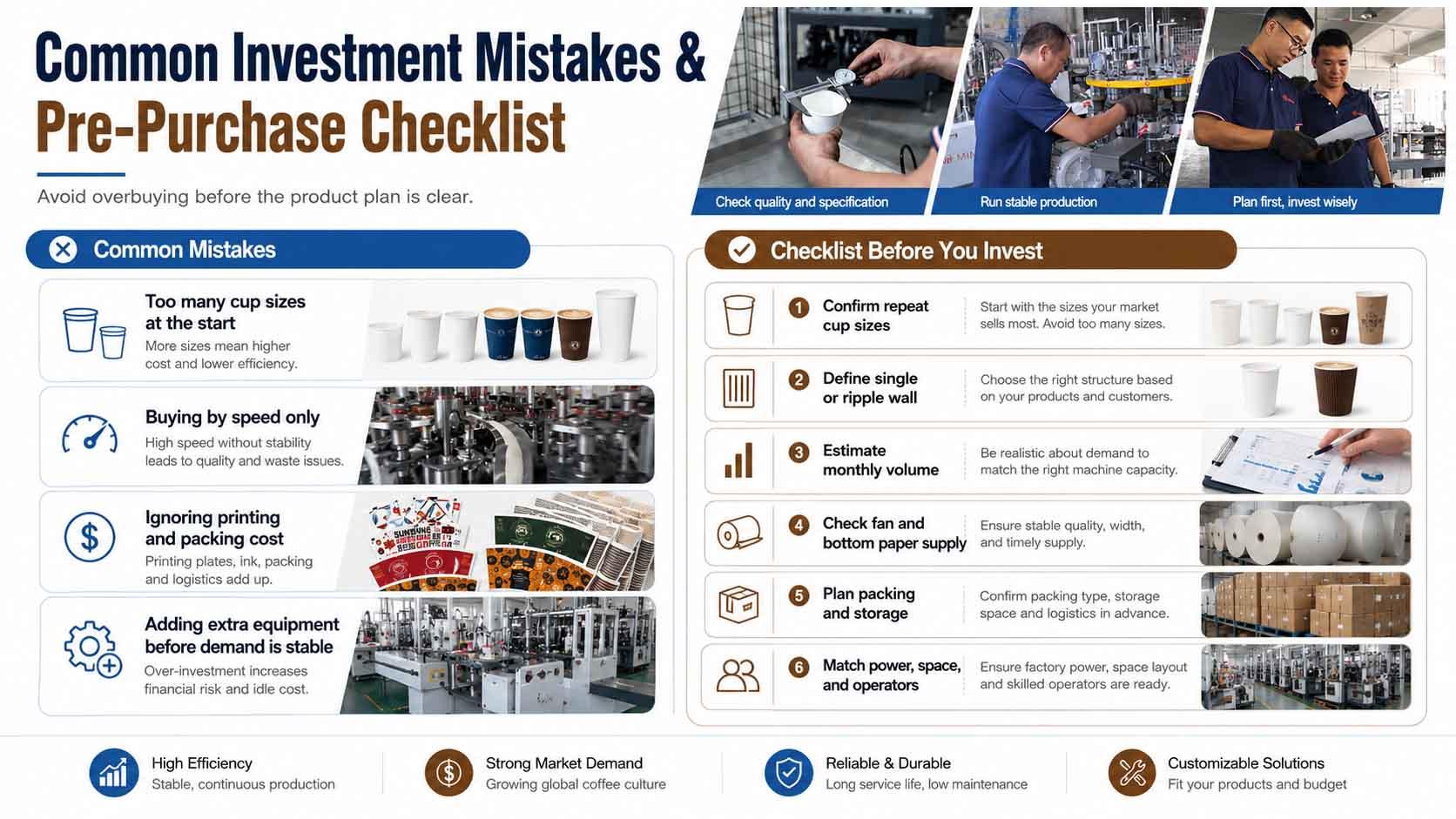
- Buying molds for many cup sizes before confirming repeat orders.
- Choosing machine speed without calculating qualified output and packing capacity.
- Assuming every coffee customer requires a double wall cup.
- Ignoring the cost and lead time of custom printed paper cup fans.
- Using one selling price and profit estimate for every design and order size.
- Adding printing and die cutting before custom orders justify the investment.
- Planning the forming machine without considering counting, bagging, and carton delivery.
The most common mistake is building a broad product catalog before building a stable customer base.
Pre-Purchase Checklist
- Identify the first two or three repeatable coffee cup sizes.
- Confirm single wall, sleeve, or double wall demand.
- Estimate monthly volume by cup size and customer type.
- Confirm paper GSM, coating, fan printing, and bottom paper requirements.
- Calculate finished cup cost and profit by order type.
- Decide whether printing and die cutting will be outsourced or added later.
- Plan inspection, counting, bagging, sealing, and carton quantities.
- Leave workshop space for future outer-wall or packing equipment.
FAQs
Is a coffee cup making machine different from a general paper cup machine?
The forming principle may be similar, but the selected configuration, molds, materials, sealing method, and cup specifications must match the intended coffee cup products.
Should a startup produce double wall coffee cups immediately?
Only when premium hot drink demand is already visible. Many startups begin with single wall cups and add outer-wall equipment after receiving repeat premium orders.
Should printed paper cup fans be purchased or produced in-house?
Ready printed fans reduce early investment. In-house printing and die cutting become more useful when design volume, delivery pressure, and repeat orders justify the extra equipment.
How many cup sizes should a new coffee cup factory start with?
There is no universal number, but a limited range based on confirmed local demand is easier to manage than a large catalog with uncertain sales.
What information is needed before requesting a machine recommendation?
Prepare cup dimensions or samples, target applications, material type, monthly volume, printing requirements, packing quantity, workshop conditions, and future product plans.
The Bottom Line
A coffee cup making machine should be selected after the buyer understands target customers, repeatable cup sizes, printing needs, heat-insulation requirements, material supply, and packing specifications. The best starting setup is not necessarily the one with the most molds or highest capacity.
Start with the coffee cup products that have clear repeat demand, build a stable forming and delivery workflow, and add printing, double wall, or packing automation when real orders reveal the next bottleneck.




 Tel: +86-13362708280
 Email: george@paper-cupmakingmachine.com
 MP/WhatsApp: +86-13362708280
 Manufacturer Address:No.1588, Huaming Road, Feiyun Street,Ruian City Zhejiang Province -325200 China