What Should Buyers Decide Before Choosing the Machine?
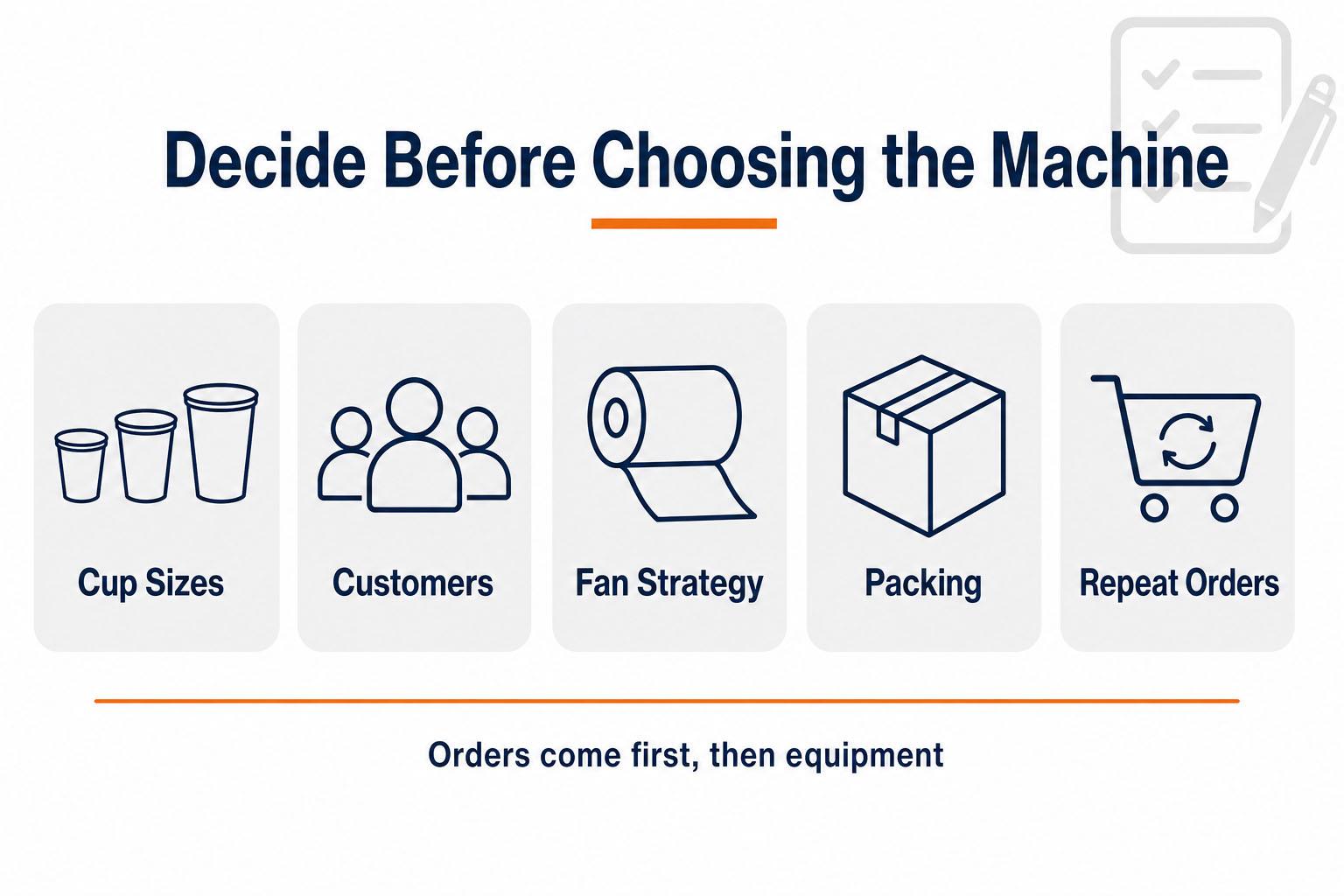
A machine for making disposable cup should be selected after the buyer confirms the first cup sizes, target customers, paper cup fan strategy, packing method, and expected repeat orders. The machine is important, but it is only one part of a production plan that must turn raw material into finished cups that customers can buy, store, and reorder.
Many buyers start by asking for speed and price. A better starting point is the order model: who will buy the cups, which sizes they need every week, whether cups are plain or printed, and how the finished cups will be packed. These decisions affect mold selection, material cost, labor planning, waste, and delivery speed.
For buyers comparing a paper cup machine for disposable cup production, the practical rule is clear: choose equipment around stable orders first, then expand the line after the product mix proves repeat demand.
What Does Disposable Cup Production Really Include?
Disposable cup production is not only cup forming. A small factory still needs paper cup fan supply, bottom paper, molds, inspection, counting, bags, cartons, labels, storage, and delivery rules. If one of these steps is weak, the factory may produce cups but struggle to ship consistent orders.
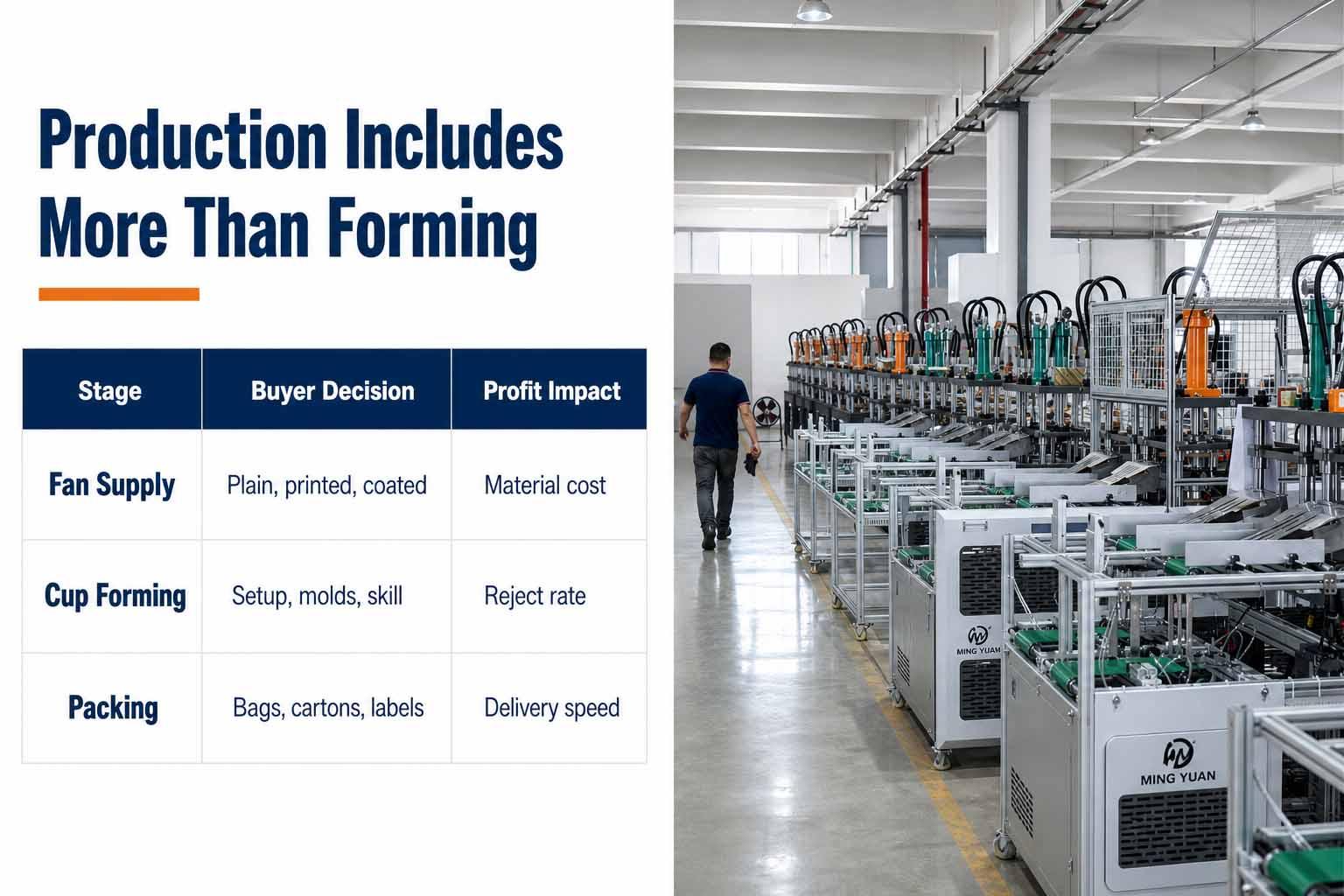
| Production Stage | Buyer Decision | Profit Impact |
|---|
| Paper cup fan supply | Plain, printed, PE coated, PLA coated, or kraft material | Controls raw material cost and inventory risk |
| Cup forming | Machine setup, molds, cup size range, operator skill | Controls usable output and reject rate |
| Packing | Cups per bag, bags per carton, label method | Controls delivery speed and customer reordering |
How to Choose the First Cup Sizes
The first product mix should be narrow enough to manage well. A factory does not need to offer every cup size at the beginning. Too many sizes increase mold cost, fan inventory, setup changes, packing variations, and slow-moving stock.
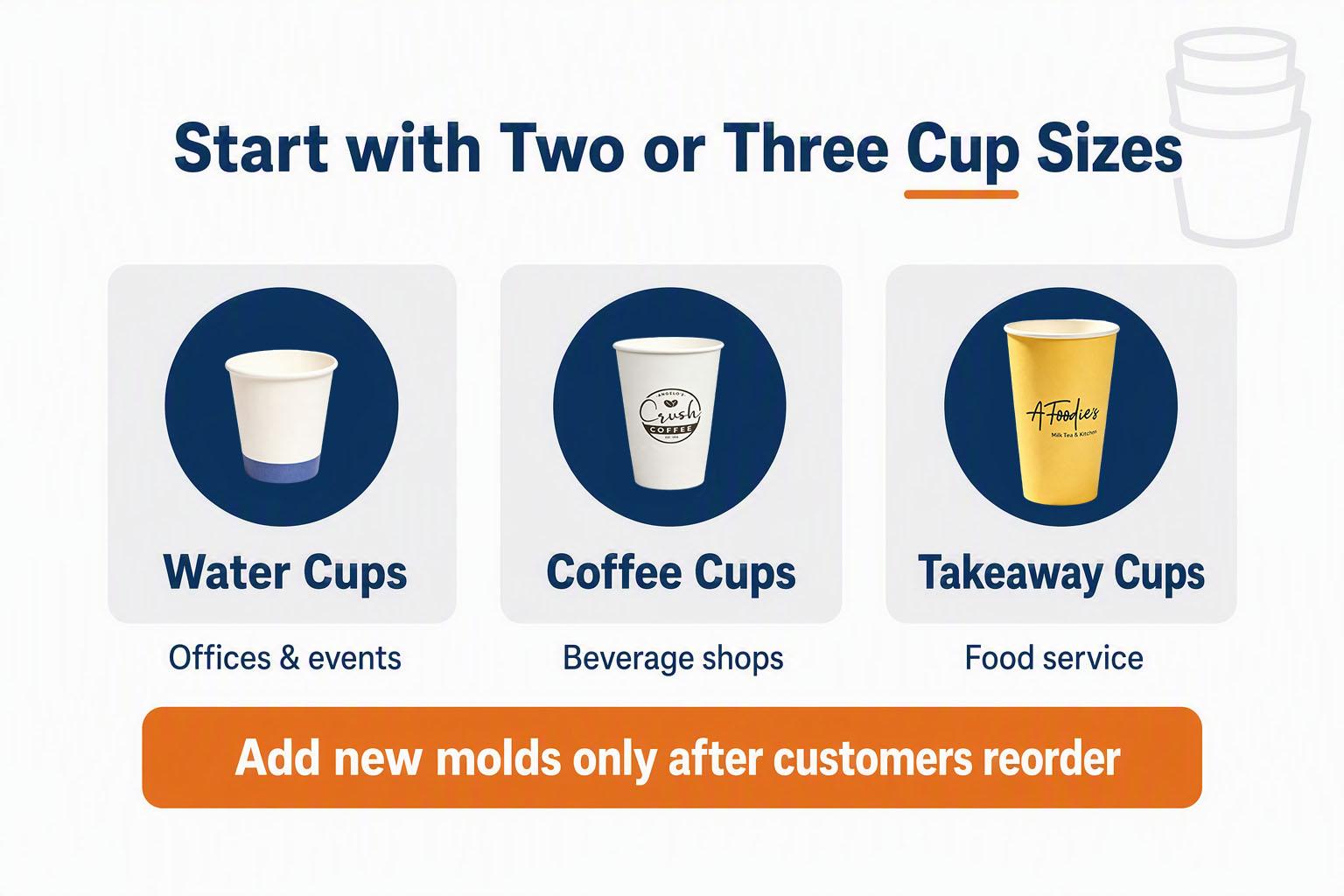
For startup disposable cup making machine projects, the first sizes should come from local repeat demand. Water cups may suit offices, schools, events, and catering suppliers. Coffee and hot drink cups may suit beverage shops and food service distributors. Larger takeaway drink cups may need different paper, lids, and packing standards.
Cup size rule
Start with the two or three cup sizes that have the clearest repeat demand, then add new molds only after customers reorder consistently.
How Paper Cup Fan Choice Affects Profit
Paper cup fan choice affects cost, forming stability, customer appearance, and inventory risk. Ready paper cup fans help startups begin faster, while in-house printing and die cutting may fit factories with stable custom orders. The wrong material strategy can turn a profitable order into a slow-moving stock problem.
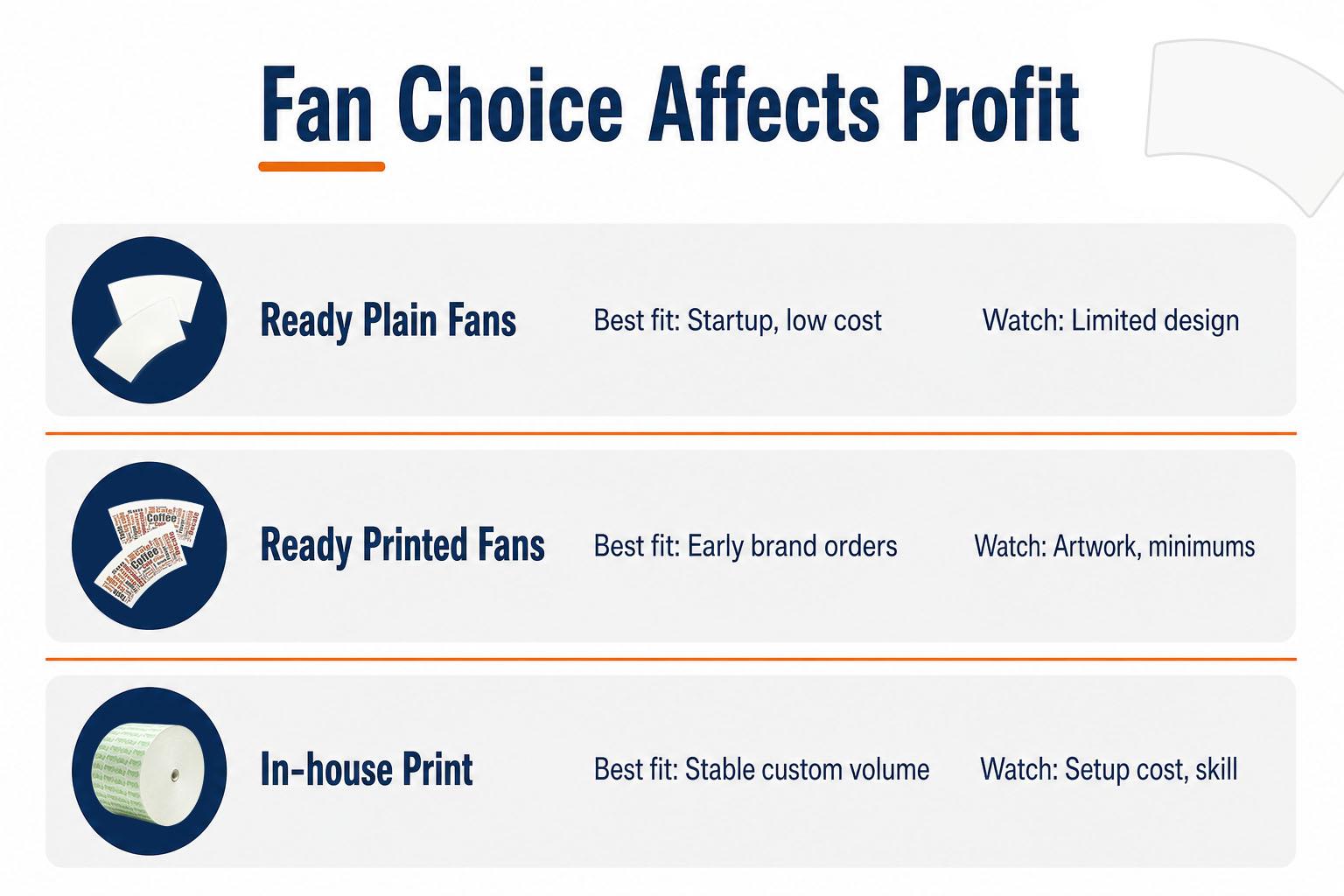
| Fan Strategy | Best Fit | Risk to Watch |
|---|
| Buy ready plain fans | Low-risk startup production and cost-sensitive orders | Limited customization and supplier lead time |
| Buy ready printed fans | Early branded cup orders without printing equipment | Artwork approval, minimum quantity, and unsold custom stock |
| Print and die cut in-house | Factories with stable volume and many repeat custom designs | Higher setup cost, staff skill, waste control, and color management |
Disposable paper cup machine investment should be judged by finished cup cost, not by equipment price alone. The factory must know how much each sellable cup costs after material, labor, packing, waste, and overhead are included.
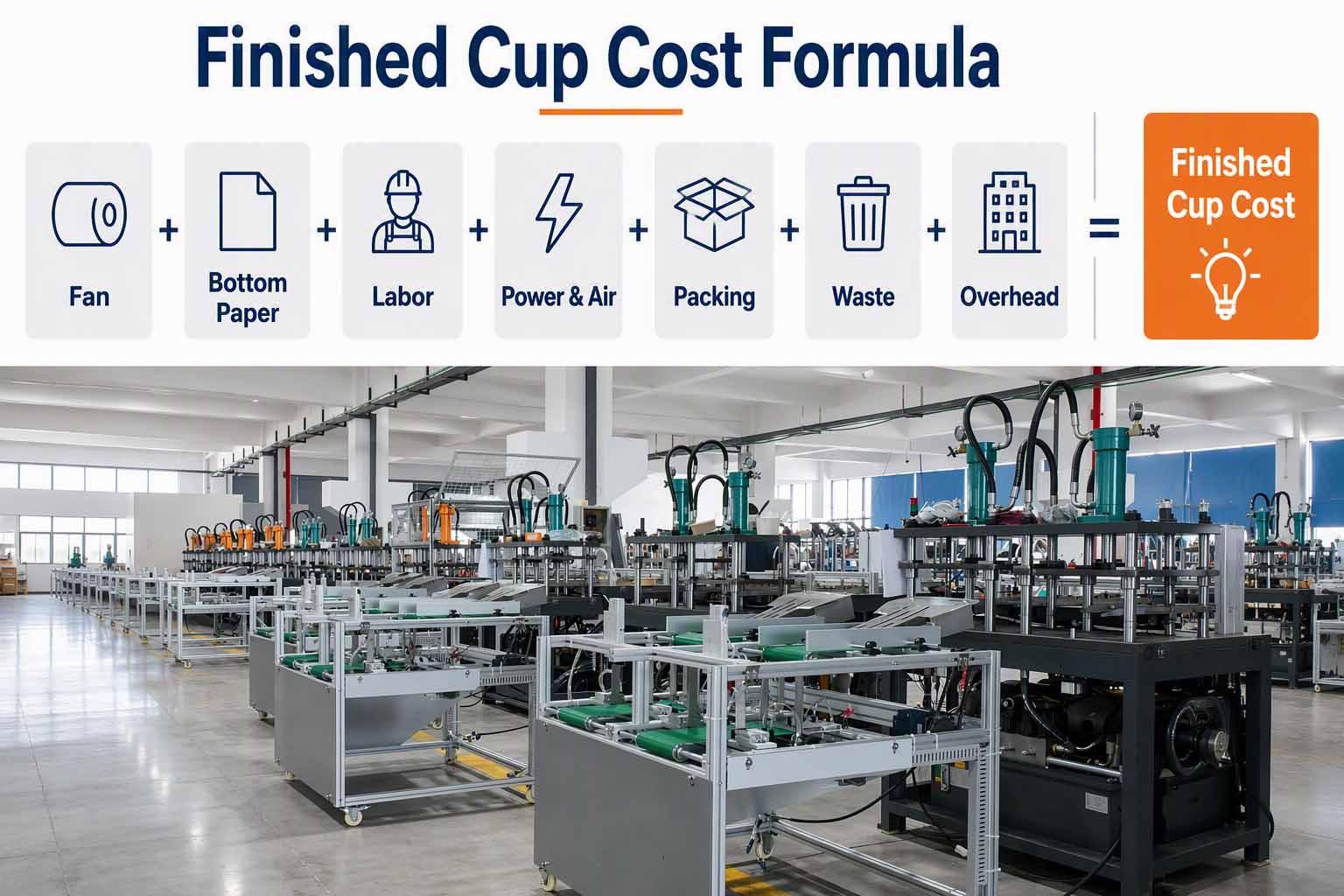
Finished cup cost formula
Finished disposable cup cost = usable paper cup fan cost + bottom paper cost + forming labor + electricity and air cost + packing material + waste allowance + overhead per cup
This formula helps buyers compare different order types. Plain water cups may have lower selling prices and tighter margins. Branded hot drink cups may have higher selling prices but also higher fan cost and approval risk. A cup is profitable only when the selling price covers the true finished cup cost and leaves enough margin for repeat production.
Why Real Output Matters More Than Quoted Speed
Machine speed is useful for comparison, but real factory output is usually lower than the number shown in a simple quotation. Operators need adjustment time, paper cup fans may vary by batch, molds need changeover, and some cups must be rejected during startup or material changes.
For order planning, buyers should estimate accepted packed cups per shift instead of theoretical cups per minute. This gives a more realistic view of how many cartons can be delivered to customers each day.
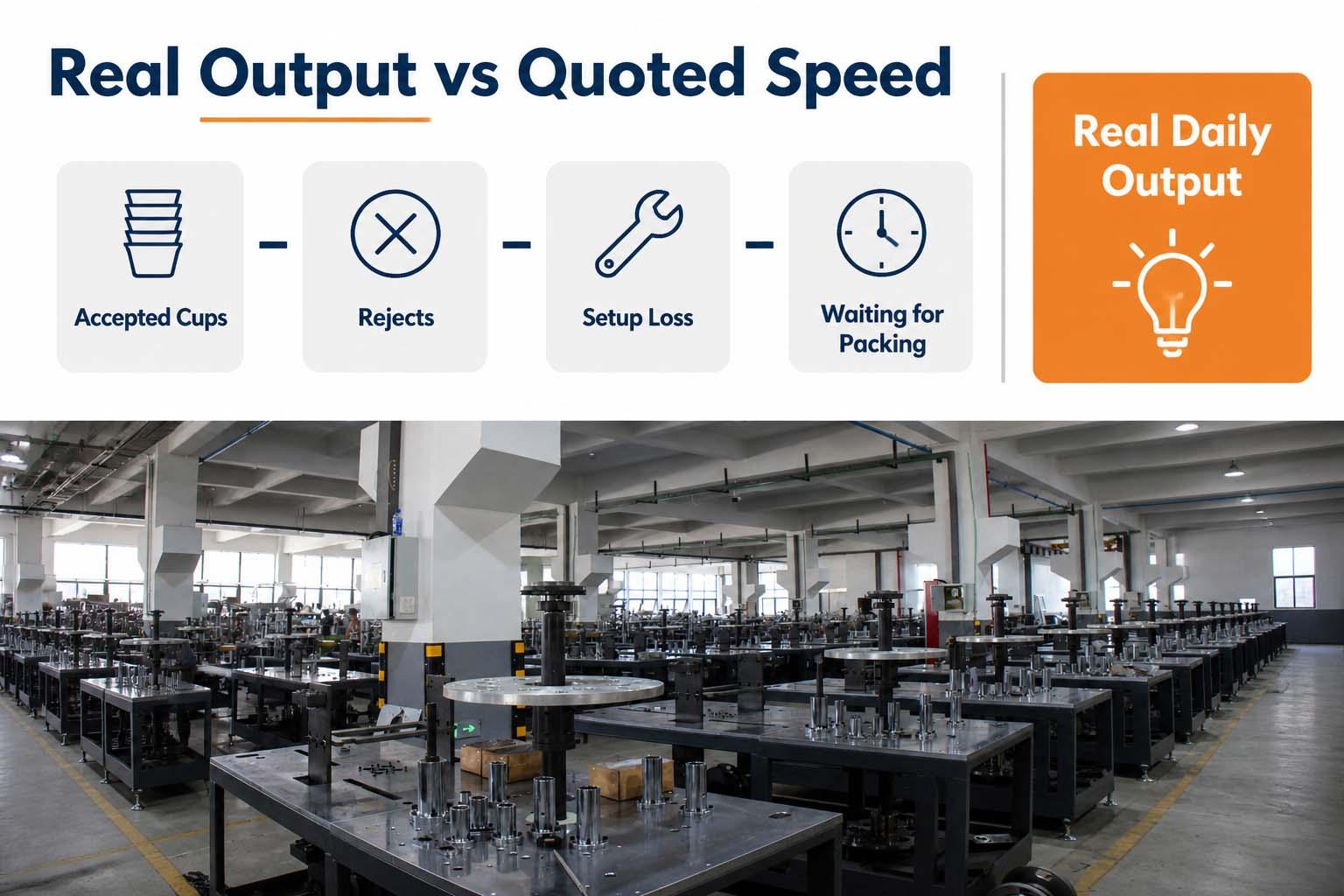
Real output formula
Real daily output = accepted formed cups - rejected cups - setup loss - cups waiting for packing
This is why a practical disposable cup factory tracks good cups, rejected cups, material waste, packing delay, and order delivery together. A machine is only productive when the factory can turn formed cups into packed, sellable cartons.
Which Setup Fits Different Buyers?
Not every buyer needs the same setup. A local distributor may need packing accuracy more than upstream printing. A startup factory may need a focused forming setup and reliable ready fans. An existing cup factory may need better fan control or downstream automation after orders increase.
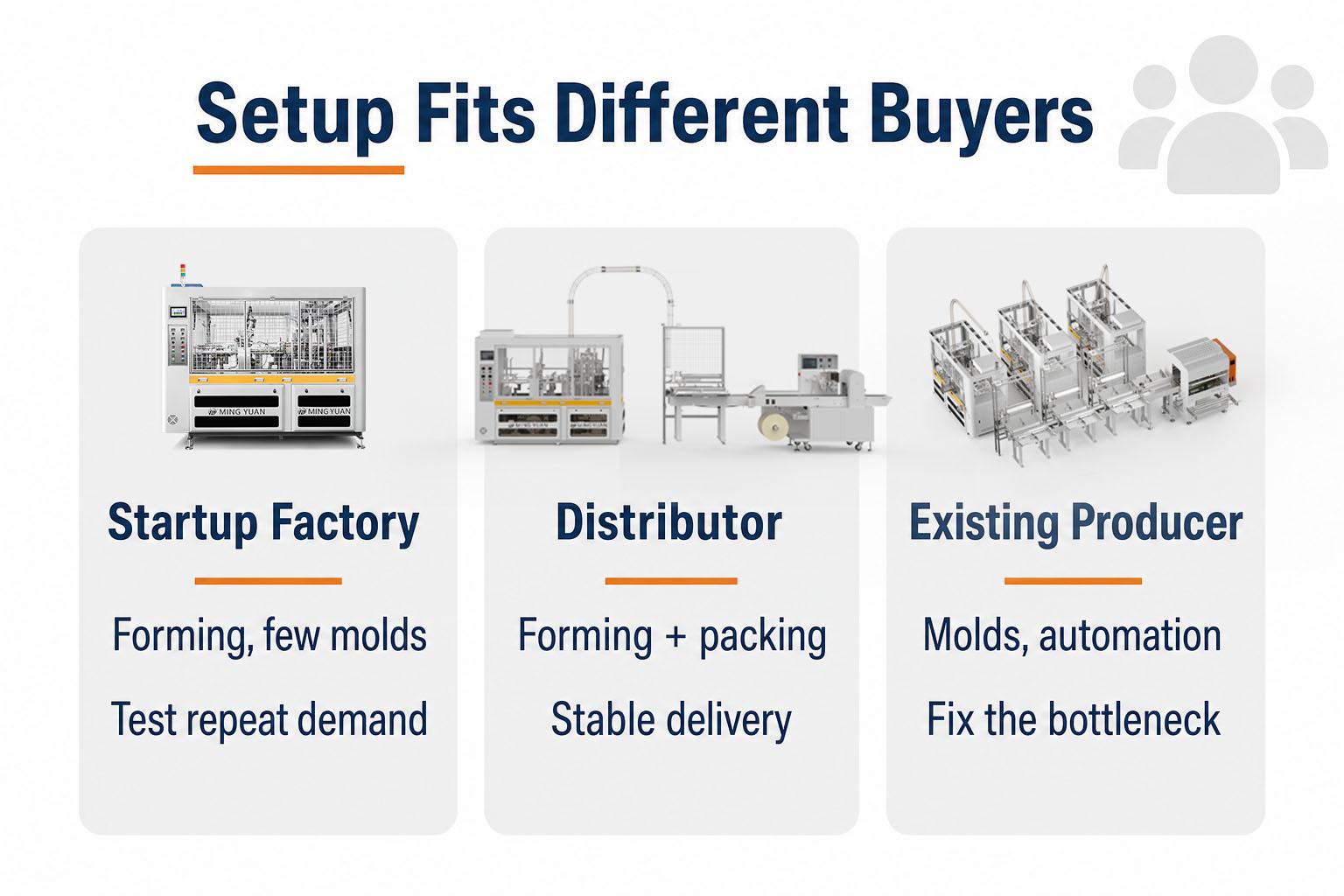
| Buyer Type | Practical Starting Setup | Reason |
|---|
| Startup factory | Forming machine, limited molds, ready paper cup fans, manual or semi-structured packing | Controls investment while testing repeat demand |
| Local packaging distributor | Forming plus clear counting, bagging, and carton standards | Supports stable delivery to shops, offices, and food service customers |
| Existing cup producer | Add molds, upstream fan preparation, or automatic packing based on bottleneck | Improves the weak stage instead of buying unnecessary equipment |
Why Packing Should Be Planned Early
Customers buy packed cups, not loose formed cups. If a factory can form cups quickly but counting, bagging, sealing, and carton preparation are slow, the finished delivery speed will still be limited. Packing is often where labor pressure appears after forming becomes stable.
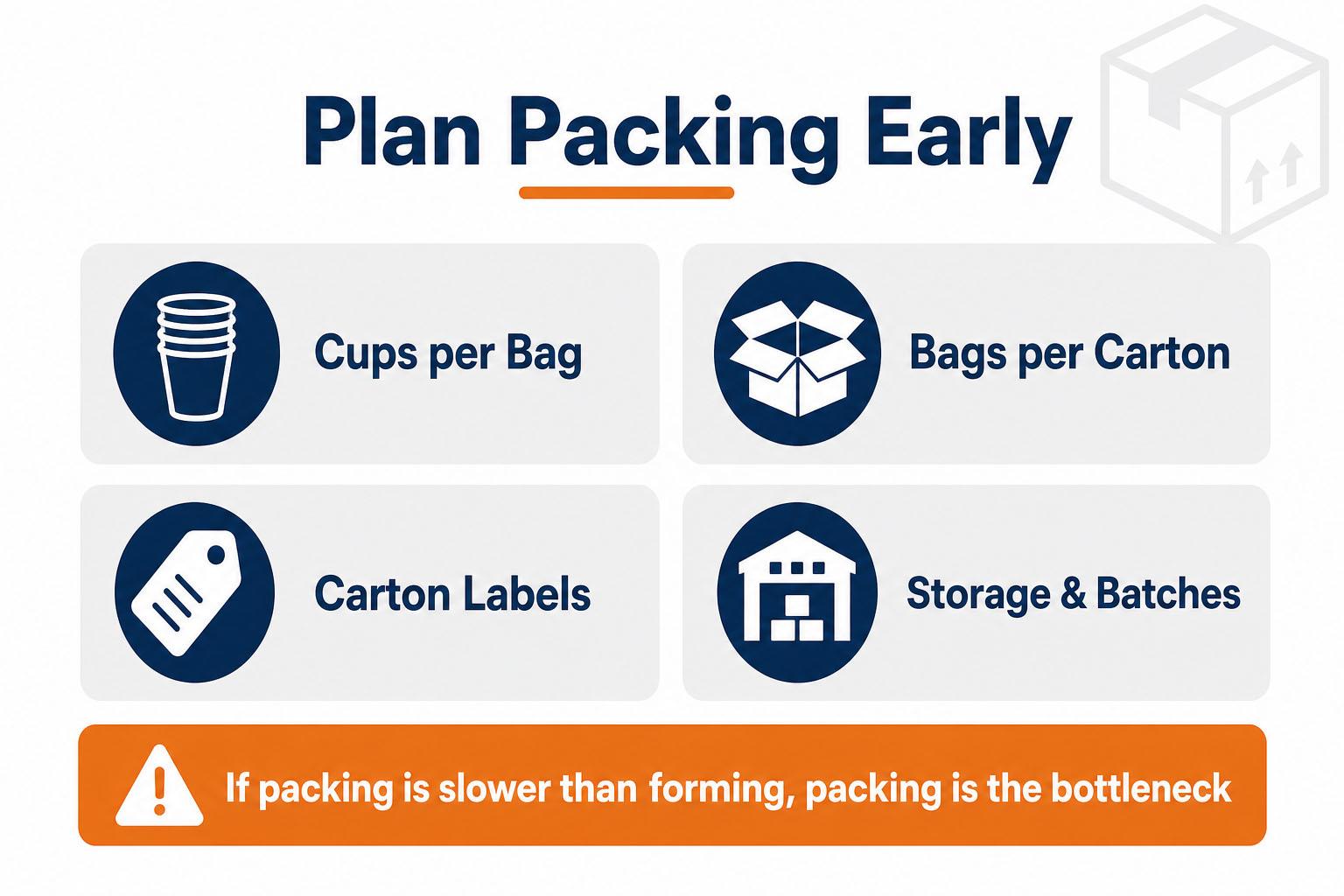
Before buying equipment, define cups per bag, bags per carton, carton label rules, storage method, and delivery batch size. If packed cups per shift are lower than accepted formed cups per shift, packing becomes the real bottleneck.
A Practical First-Order Plan
The first order should be simple enough to train operators and test the workflow. Choose one cup size, one material specification, one packing rule, and one realistic delivery quantity. This gives the factory a clear baseline before it accepts more sizes or custom printed orders.
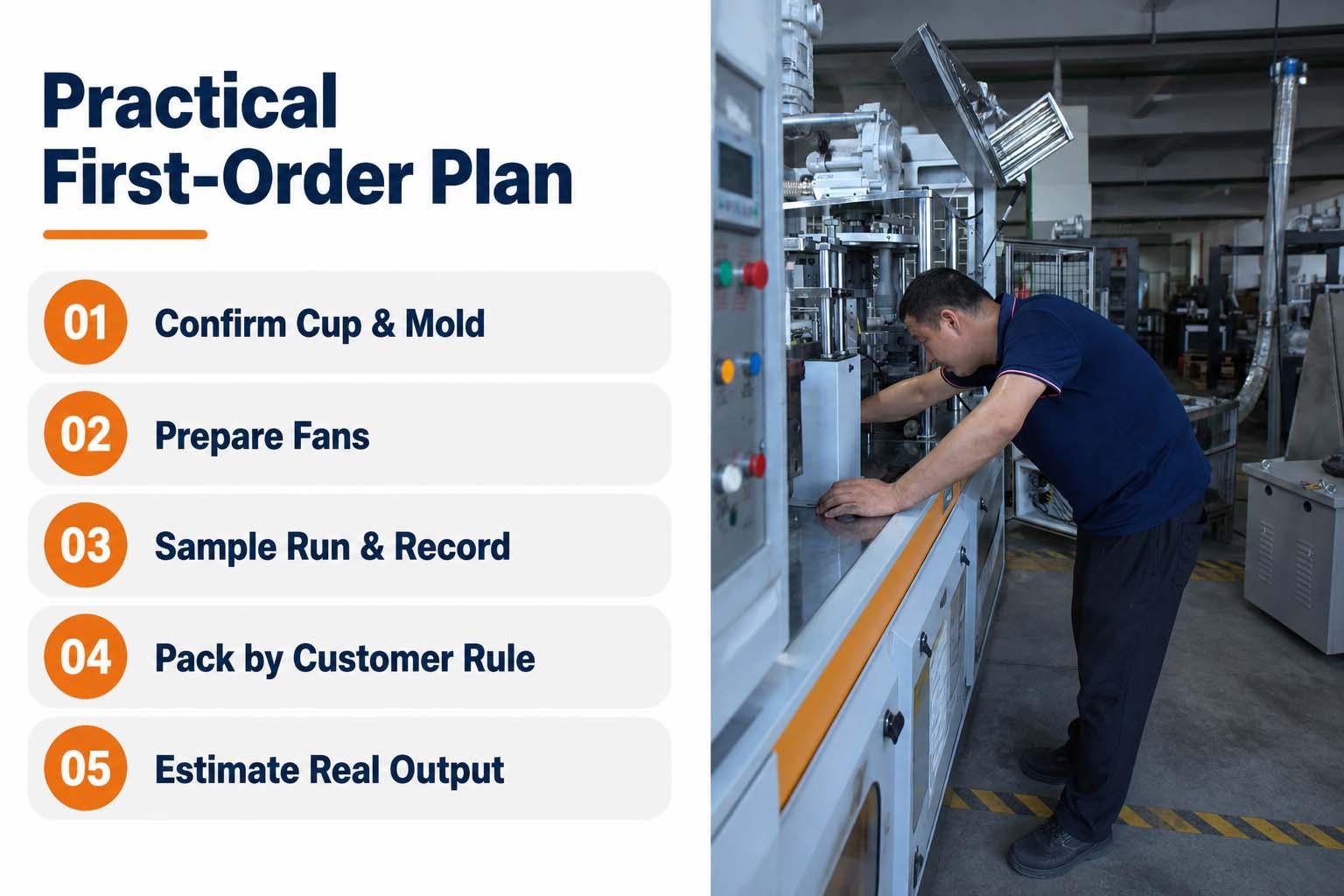
- Confirm the target cup size and matching mold before ordering material.
- Prepare paper cup fans close to the final production specification.
- Run sample production and record good cups, rejects, adjustment time, and operator notes.
- Pack finished cups by the same bag and carton rule that customers will receive.
- Use the result to estimate real output, material waste, and next order pricing.
Common Mistakes That Reduce Profit
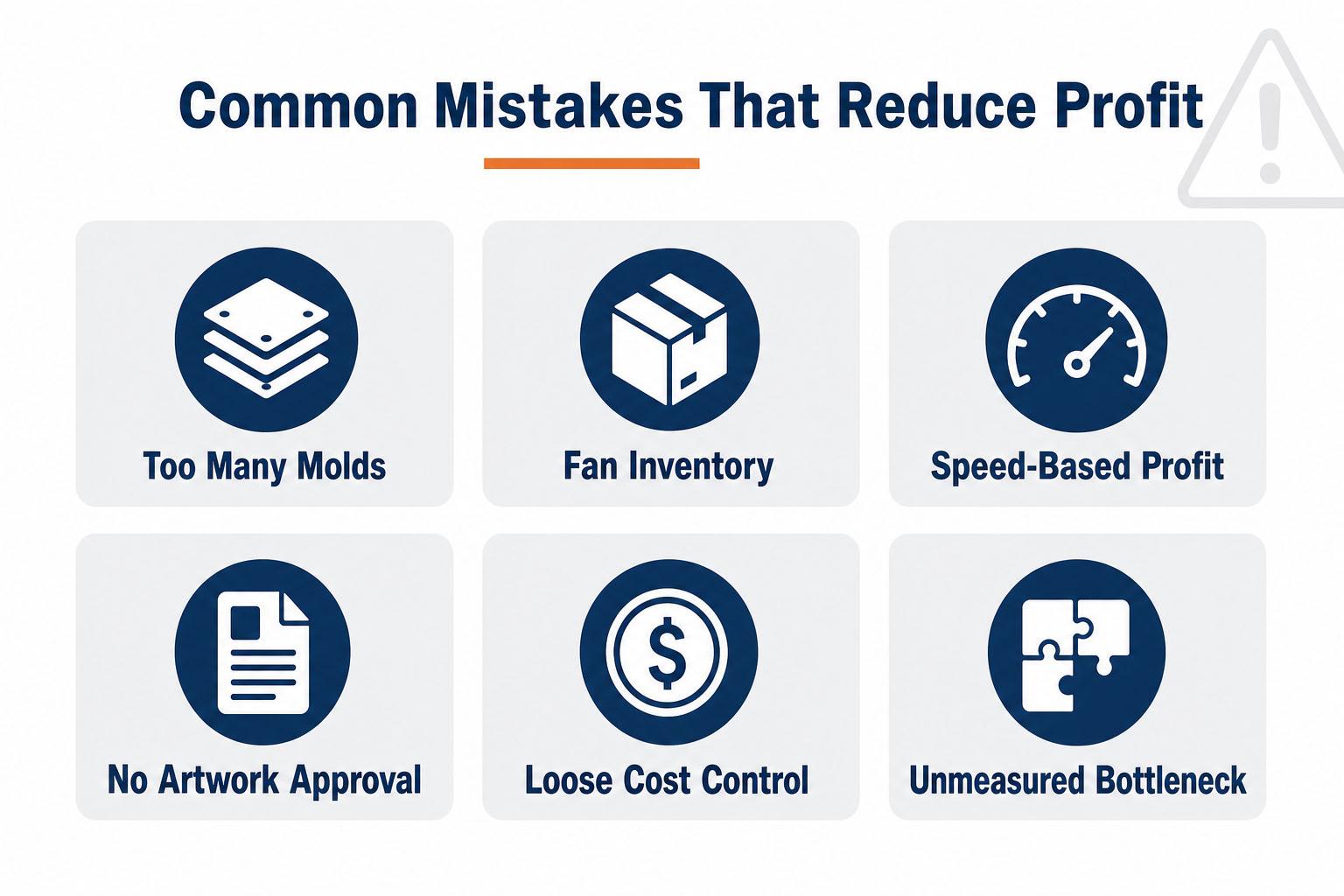
- Buying many molds before knowing which disposable cup sizes customers reorder.
- Ignoring paper cup fan inventory and treating material supply as a small detail.
- Calculating profit from machine speed instead of accepted packed cups.
- Accepting custom printed orders without artwork approval, deposit rules, or minimum quantities.
- Forgetting that low-price plain cups need very tight cost and waste control.
- Adding printing, die cutting, or packing automation before the actual bottleneck is measured.
Pre-Purchase Checklist
- List the first two or three disposable cup sizes with the strongest repeat demand.
- Separate plain cup orders from printed cup orders in the cost sheet.
- Confirm whether ready fans are enough for the startup stage.
- Calculate finished cup cost with waste, labor, packing, and overhead included.
- Define packing quantities before estimating daily delivery capacity.
- Plan upgrades only after real output, customer orders, and bottlenecks are measured.
Frequently Asked Questions
Is a machine for making disposable cup different from a general paper cup machine?
It is usually a paper cup forming machine configured for disposable cup sizes, materials, and order needs. The difference is mainly in cup size planning, material selection, packing standards, and target customers.
Should a startup buy printing and die cutting equipment at the same time?
Usually not at the beginning unless custom printed orders are already stable. Many startups reduce risk by buying ready paper cup fans first and adding upstream equipment later.
What is more important than machine speed?
Accepted packed cups are more useful than theoretical speed. Buyers should consider rejects, setup time, operator learning, material stability, and packing capacity.
When does a disposable cup factory need automatic packing?
Automatic packing becomes useful when manual counting, bagging, and sealing limit delivery speed or create labor pressure. The decision should be based on measured packing bottlenecks.
How can buyers reduce first-order risk?
Start with one clear cup size, one material specification, a simple packing rule, and a realistic delivery quantity. Record output, waste, and labor before accepting more complicated orders.
The Bottom Line
A machine for making disposable cup should be chosen through order planning, not only machine comparison. The buyer needs a clear product mix, reliable paper cup fan strategy, realistic cost formula, packing plan, and first-order test before scaling production.
The safest investment path is to start with repeatable cup sizes, control material and packing cost, then upgrade upstream or downstream equipment when real orders prove the need.
Before purchasing, prepare your target cup sizes, customer groups, fan supply plan, packing quantity, finished cup cost sheet, and first-order test plan. This makes machine selection more accurate and helps the factory build production around profitable orders.


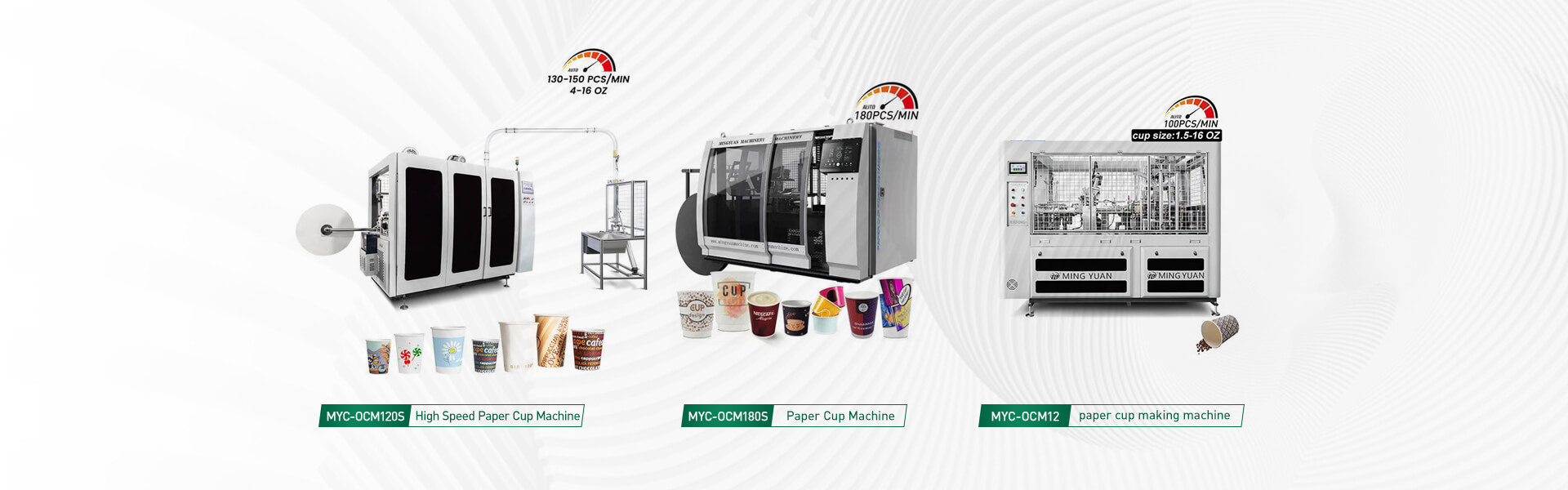
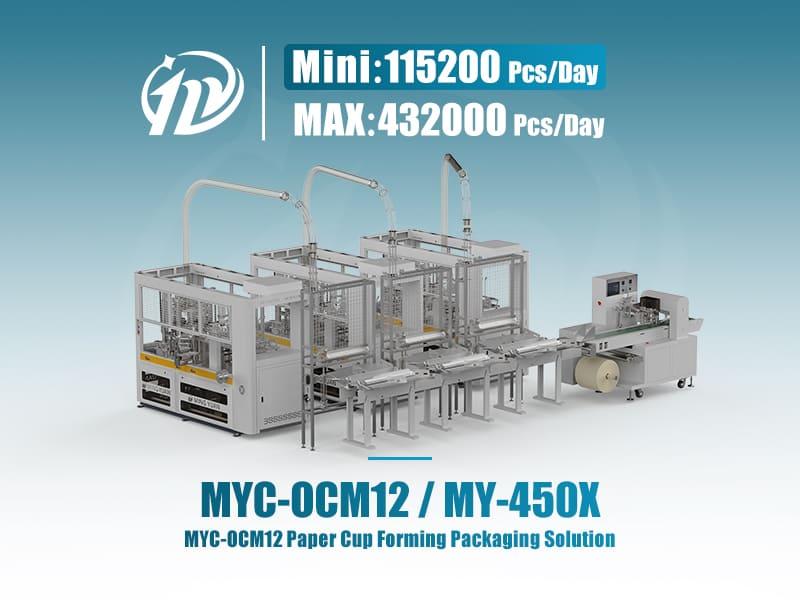

 Tel: +86-13362708280
 Email: george@paper-cupmakingmachine.com
 MP/WhatsApp: +86-13362708280
 Manufacturer Address:No.1588, Huaming Road, Feiyun Street,Ruian City Zhejiang Province -325200 China