What Does This Search Usually Mean?
When buyers search for cup machine making paper, they usually want to understand how paper material becomes finished disposable paper cups and what equipment is needed to make that process profitable. The search phrase is not perfect English, but the buying intent is clear: the buyer wants a machine and workflow that can turn paper cup fans into stable, sellable cups.
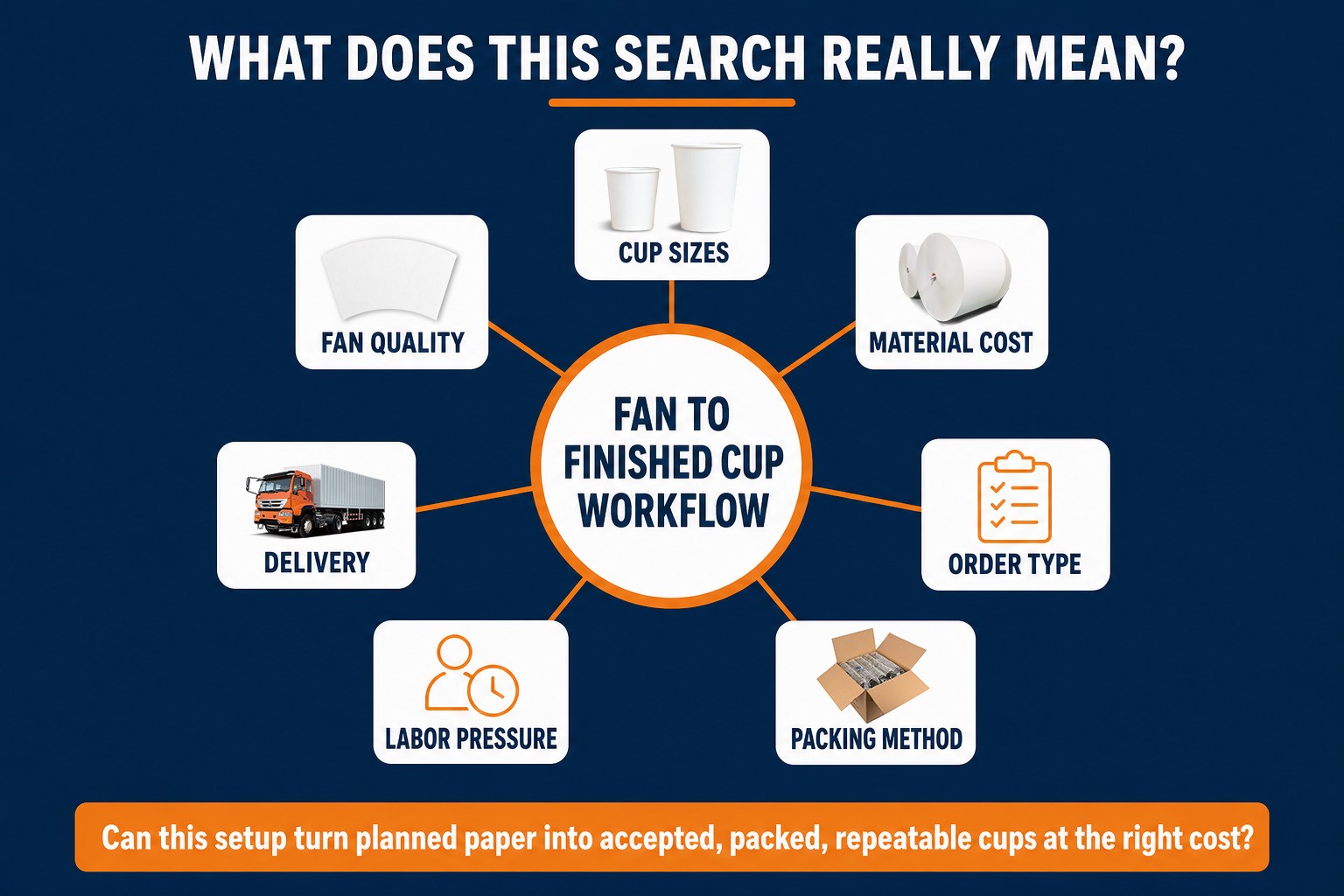
A good decision should not start with machine speed alone. It should start with cup sizes, paper cup fan quality, material cost, order type, packing method, labor pressure, and delivery requirements. If these points are ignored, a factory may buy a machine that forms cups but does not support profitable repeat orders.
For buyers comparing a paper cup machine, the practical question is: can this setup turn the planned paper material into accepted, packed, and repeatable finished cups at the right cost?
How Paper Becomes a Finished Cup
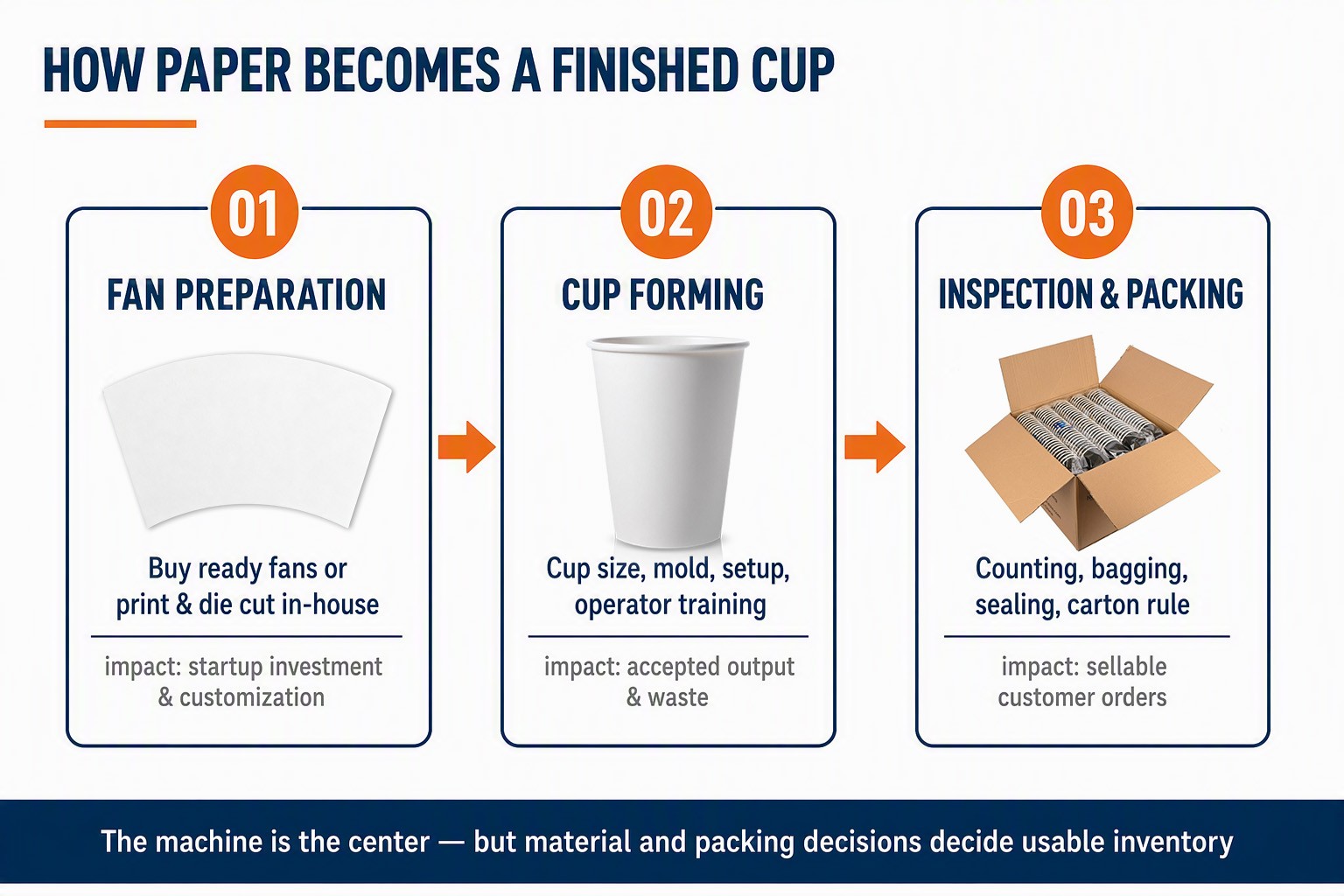
Paper cup production starts before the forming machine. The factory needs coated paper or prepared paper cup fans, bottom paper, suitable molds, operators, inspection rules, packing materials, and storage space. The machine is the center of the line, but material and packing decisions decide whether the output becomes usable sales inventory.
| Stage 1 — Paper cup fan preparation |
| Main Decision | Buy ready fans or print and die cut in-house |
| Business Impact | Controls startup investment, material cost, and customization ability |
| Stage 2 — Cup forming |
| Main Decision | Cup size, mold, machine setup, and operator training |
| Business Impact | Controls accepted output and waste level |
| Stage 3 — Inspection and packing |
| Main Decision | Counting, bagging, sealing, carton rule, and delivery batch |
| Business Impact | Controls whether formed cups become sellable customer orders |
Why Paper Cup Fan Quality Affects Machine Output
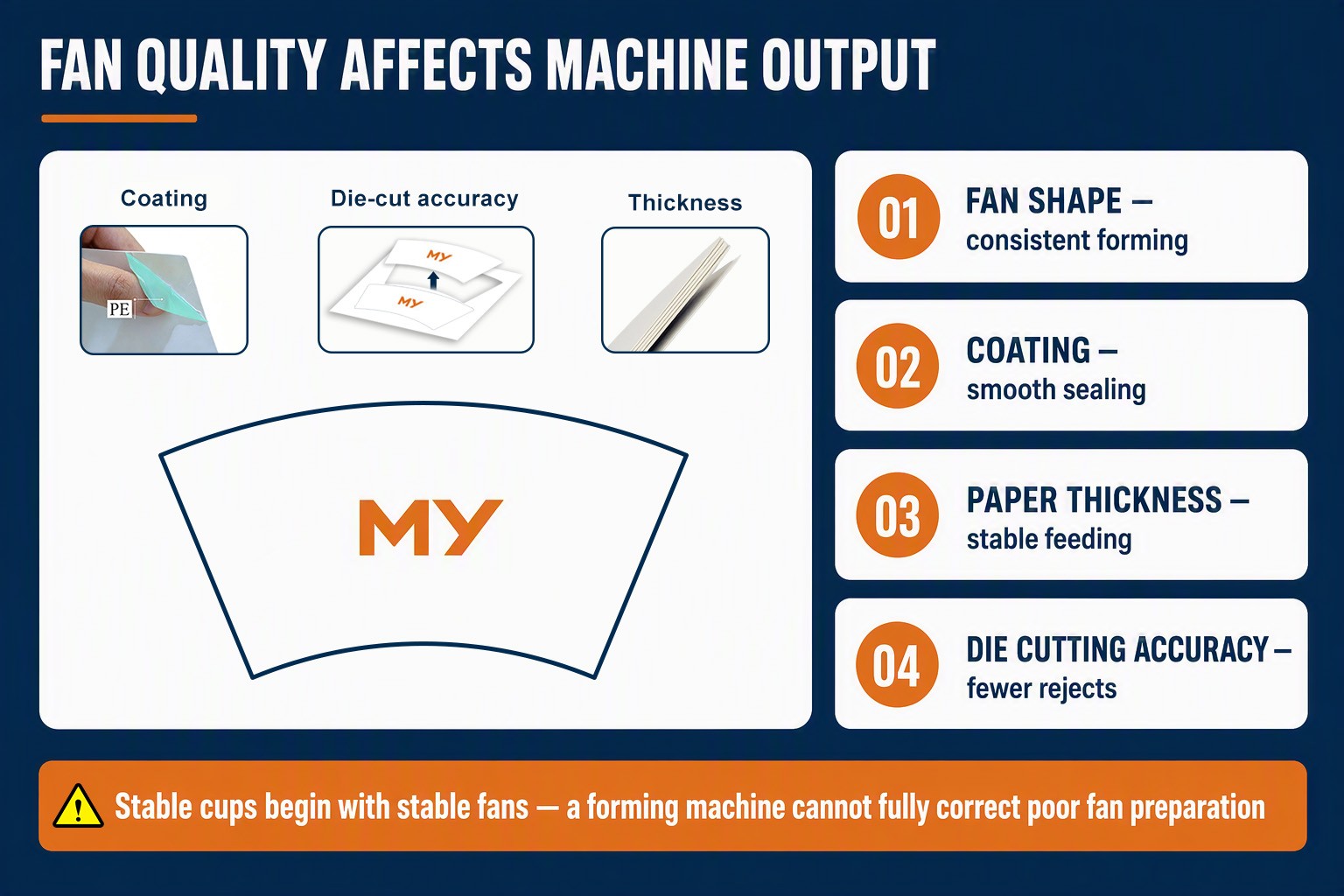
Paper cup fan quality is one of the most important factors in stable production. If the fan shape, coating, paper thickness, or die cutting accuracy is inconsistent, the forming machine may need more adjustment, produce more rejects, or stop more often. This reduces real output even when the machine itself is capable.
Factories should test the actual fan material they plan to use for commercial orders. Testing only with a supplier's sample material can create false confidence if the buyer later switches to a different local paper or printed fan supplier.
Material rule
Stable cups begin with stable fans. A forming machine cannot fully correct poor paper cup fan preparation.
How to Choose the Right Forming Setup
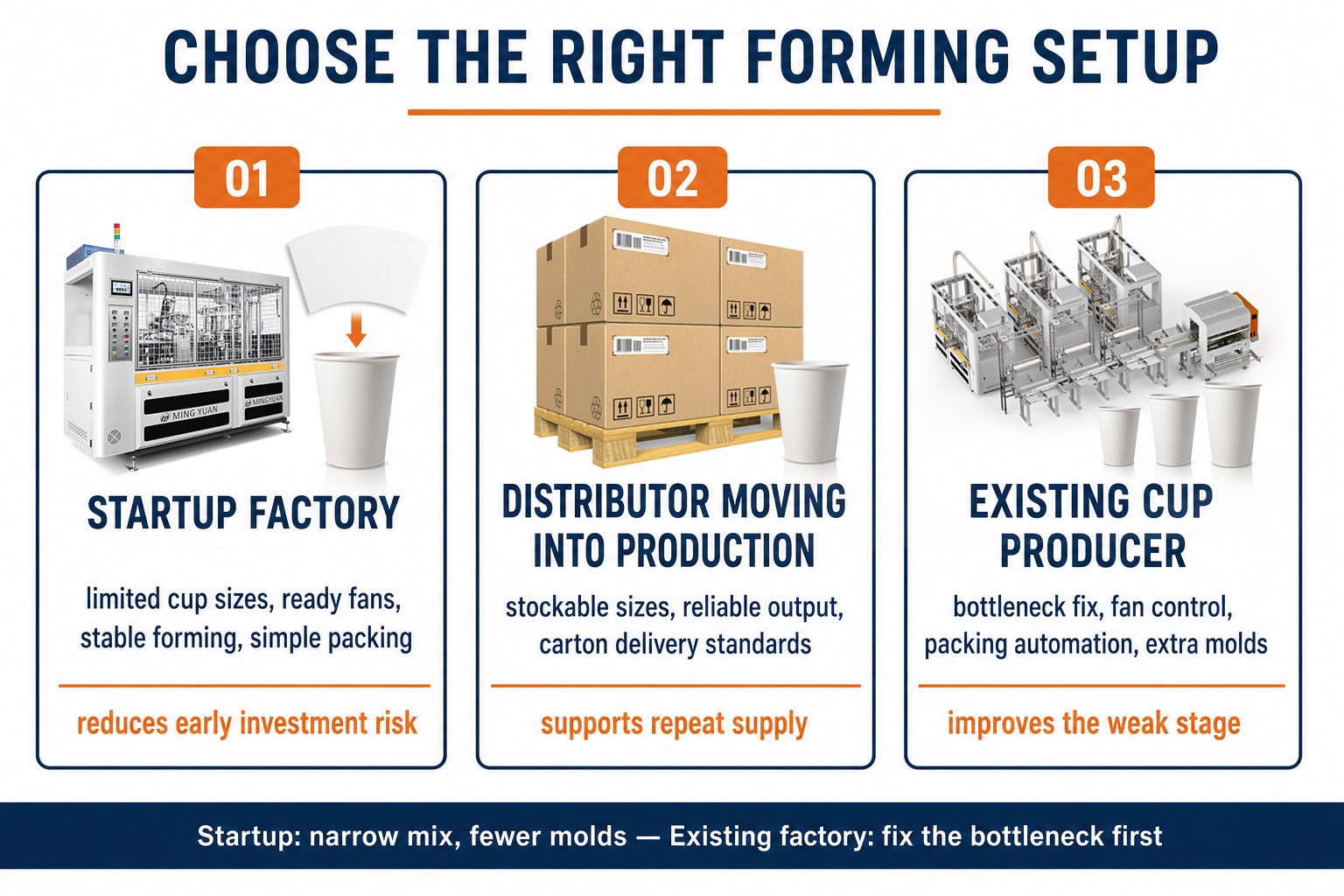
The right setup depends on cup size range, order volume, available operators, material source, and how quickly customers expect delivery. A startup should usually begin with a narrower product mix and fewer molds. An existing factory may need higher stability, extra molds, or downstream packing support.
| Startup factory |
| Suggested Focus | Limited cup sizes, ready fans, stable forming, simple packing rule |
| Reason | Reduces early investment risk while testing repeat orders |
| Distributor moving into production |
| Suggested Focus | Stockable cup sizes, reliable output, carton delivery standards |
| Reason | Supports repeat supply to shops and food service customers |
| Existing cup producer |
| Suggested Focus | Bottleneck improvement, fan control, automatic packing, or extra molds |
| Reason | Improves the weak stage instead of adding unnecessary equipment |
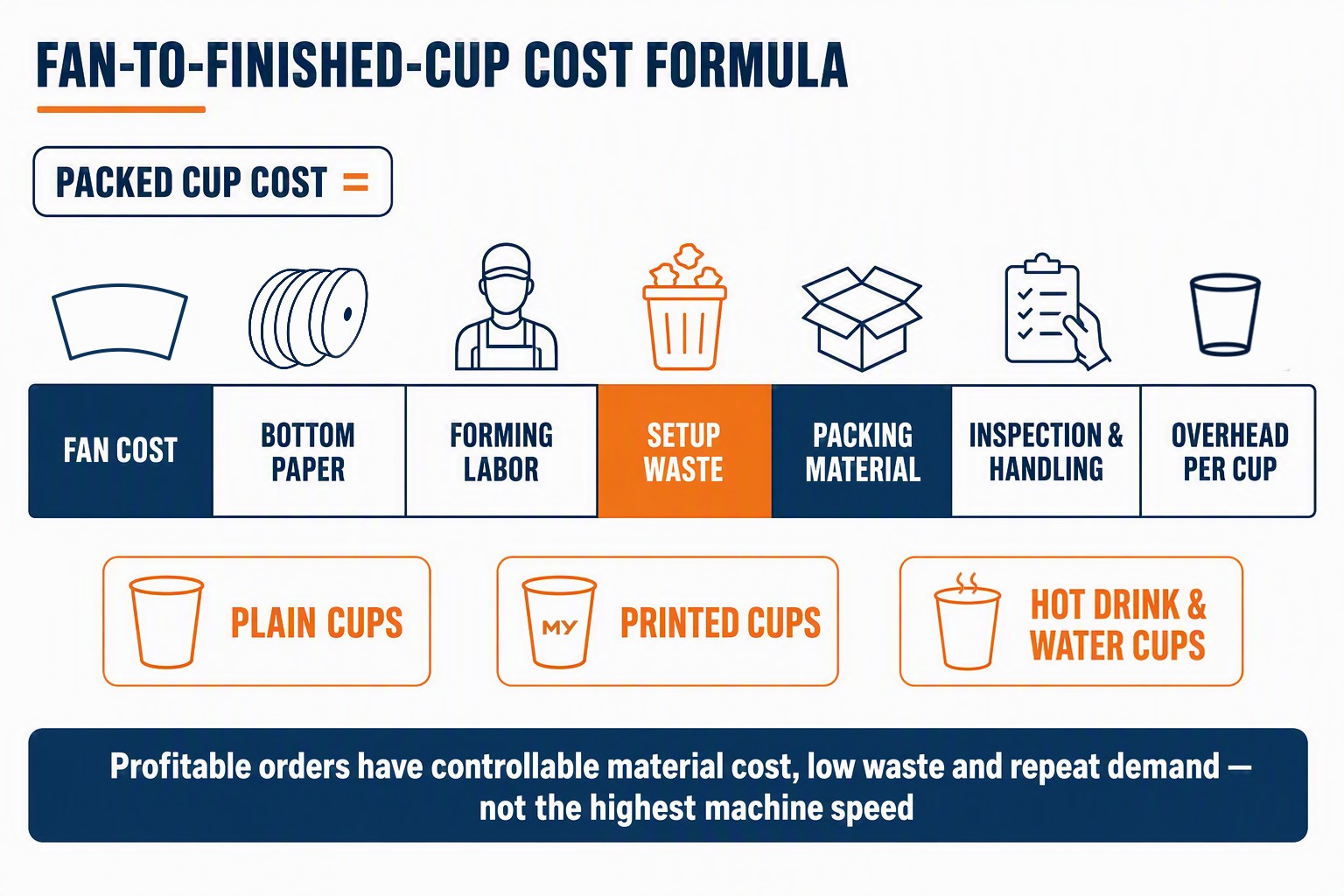
Paper cup production cost should be calculated from fan to packed cup, not only from machine output. If the buyer ignores fan waste, bottom paper, packing materials, labor, or unsold inventory, the selling price may look profitable but fail in daily production.
Finished cup cost formula
Packed cup cost = usable paper cup fan cost + bottom paper cost + forming labor + setup waste + packing material + inspection and handling cost + overhead per cup
This formula helps buyers compare plain cups, printed cups, hot drink cups, water cups, and custom branded cups. The profitable order is not the order with the highest machine speed; it is the order with controllable material cost, low waste, and repeat demand.
Buy Ready Fans or Make Fans In-House?
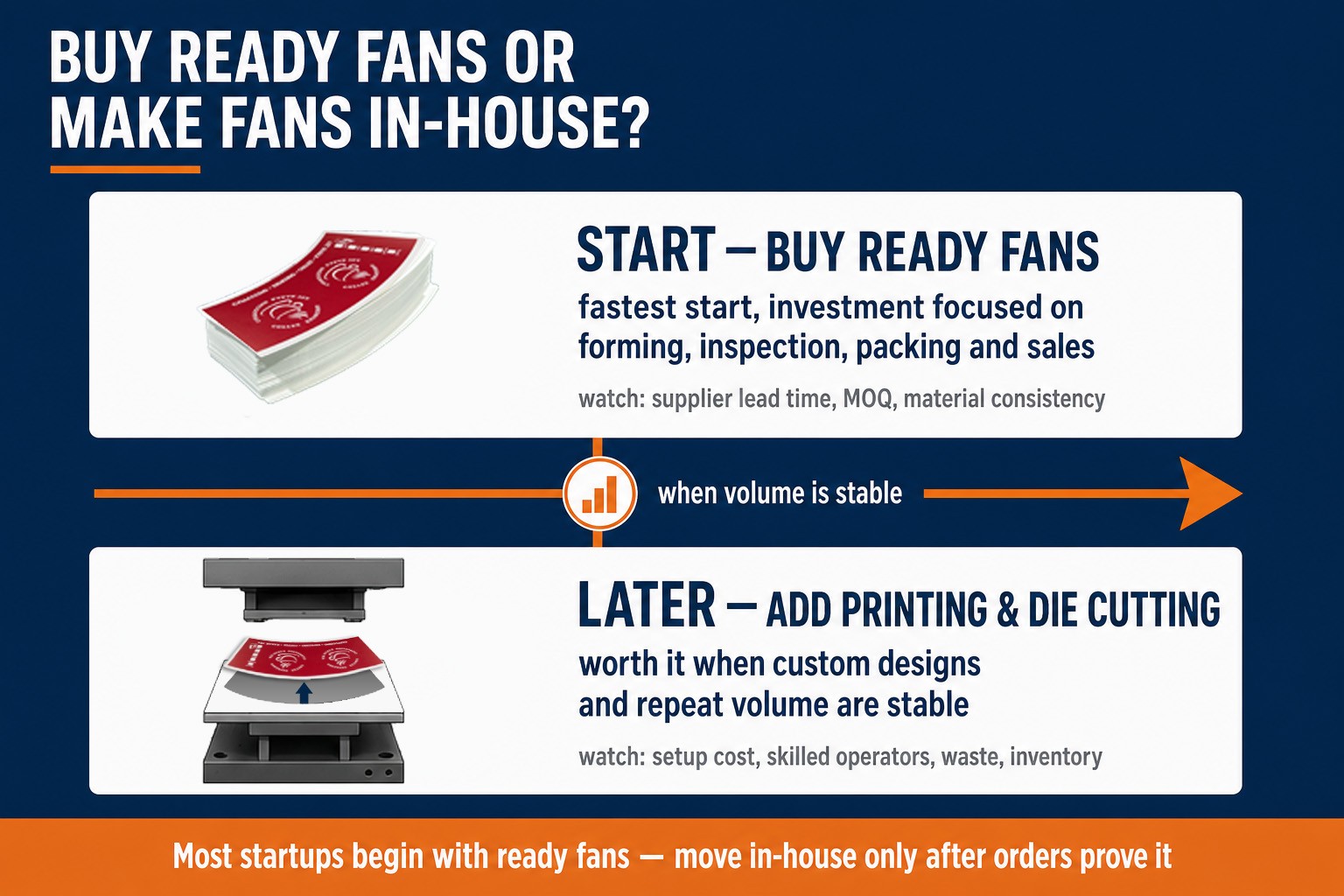
A new factory often starts faster by buying ready paper cup fans. This keeps the first investment focused on forming, inspection, packing, and sales. In-house printing and die cutting become more attractive when custom designs, repeat orders, and material volume are stable enough to justify equipment, operators, setup waste, and management work.
| Buy ready fans |
| Best Fit | Startup factories and limited product mixes |
| Risk to Watch | Supplier lead time, minimum order quantity, and material consistency |
| Add printing and die cutting later |
| Best Fit | Factories with stable branded orders and higher fan volume |
| Risk to Watch | Setup cost, skilled operators, waste, and inventory control |
Why Real Output Is Not Only Machine Speed
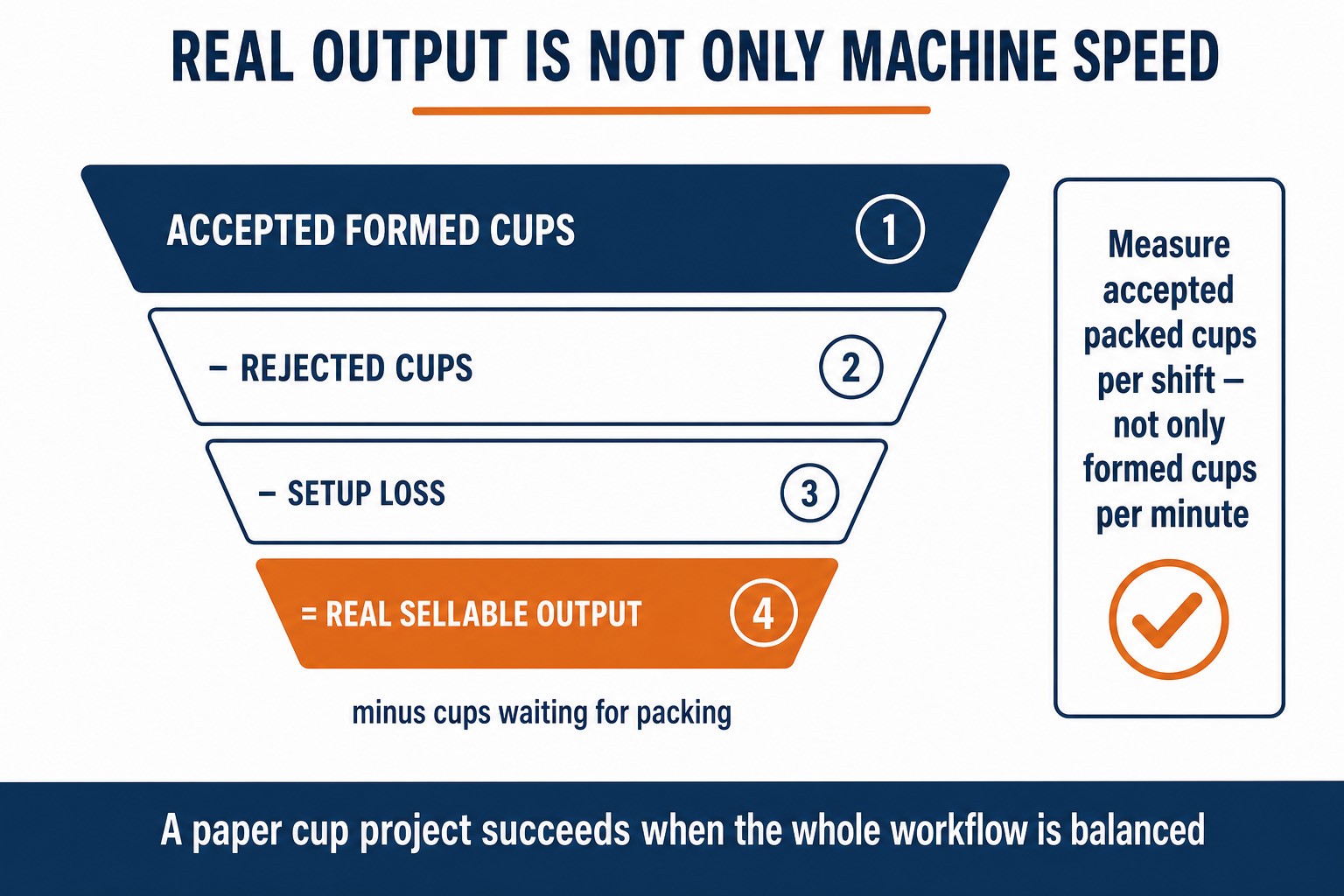
Quoted machine speed is useful, but real daily output depends on fan feeding, material stability, operator skill, setup adjustment, reject rate, and packing speed. A factory should measure accepted packed cups, not only formed cups per minute.
Real output check
Real sellable output = accepted formed cups - rejected cups - setup loss - cups waiting for packing
This is why a buyer should ask about sample testing, operator training, fan requirements, and packing method before confirming equipment. A machine paper cup project succeeds when the whole workflow is balanced.
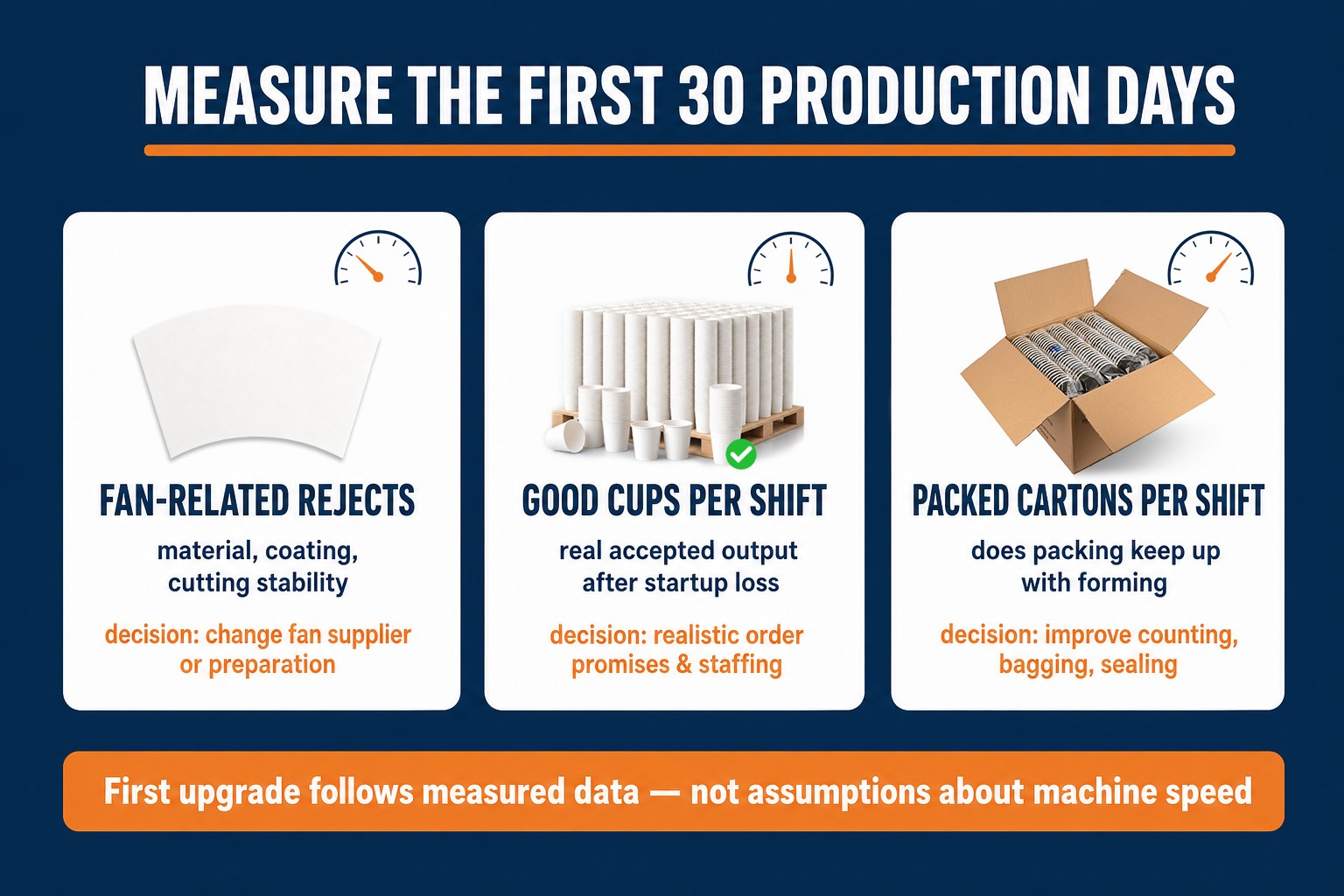
What to Measure in the First 30 Production Days
The first 30 production days should be treated as a learning period, not only a sales period. During this time, the factory should record what happens from paper cup fan feeding to carton packing. These records help the owner decide whether the next investment should be more molds, better fan supply, operator training, printing and die cutting, or packing automation.
| Fan-related rejects |
| What It Shows | Whether material, coating, or cutting quality is stable |
| Decision It Supports | Change fan supplier, improve fan preparation, or adjust material range |
| Good cups per shift |
| What It Shows | Real accepted output after startup loss |
| Decision It Supports | Set realistic order promises and staffing plans |
| Packed cartons per shift |
| What It Shows | Whether packing keeps up with forming |
| Decision It Supports | Decide if counting, bagging, sealing, or carton work needs improvement |
The first upgrade should follow measured production data, not assumptions. If most problems come from material variation, buying a faster forming machine will not solve the real issue. If cups wait for packing every day, downstream packing is the better place to improve.
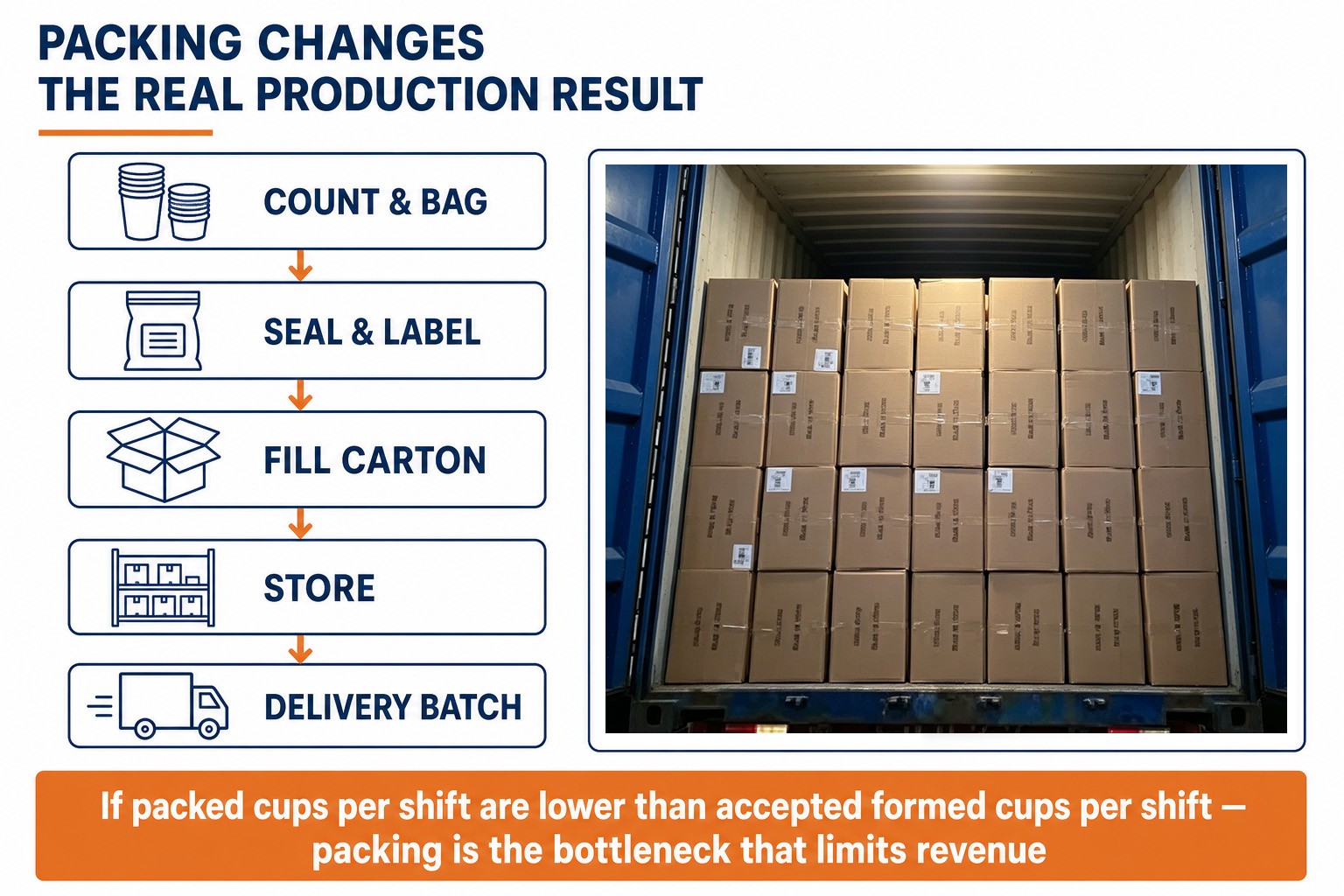
How Packing Changes the Real Production Result
Customers usually receive cups by bag, carton, delivery batch, or branch order. If packing is slow or inconsistent, the factory may have formed cups waiting on tables while customers still wait for finished cartons. This creates a delivery problem even if the forming stage looks productive.
Before purchasing, define cups per bag, bags per carton, sealing method, label method, and storage area. If packed cups per shift are lower than accepted formed cups per shift, packing is the bottleneck that limits revenue.
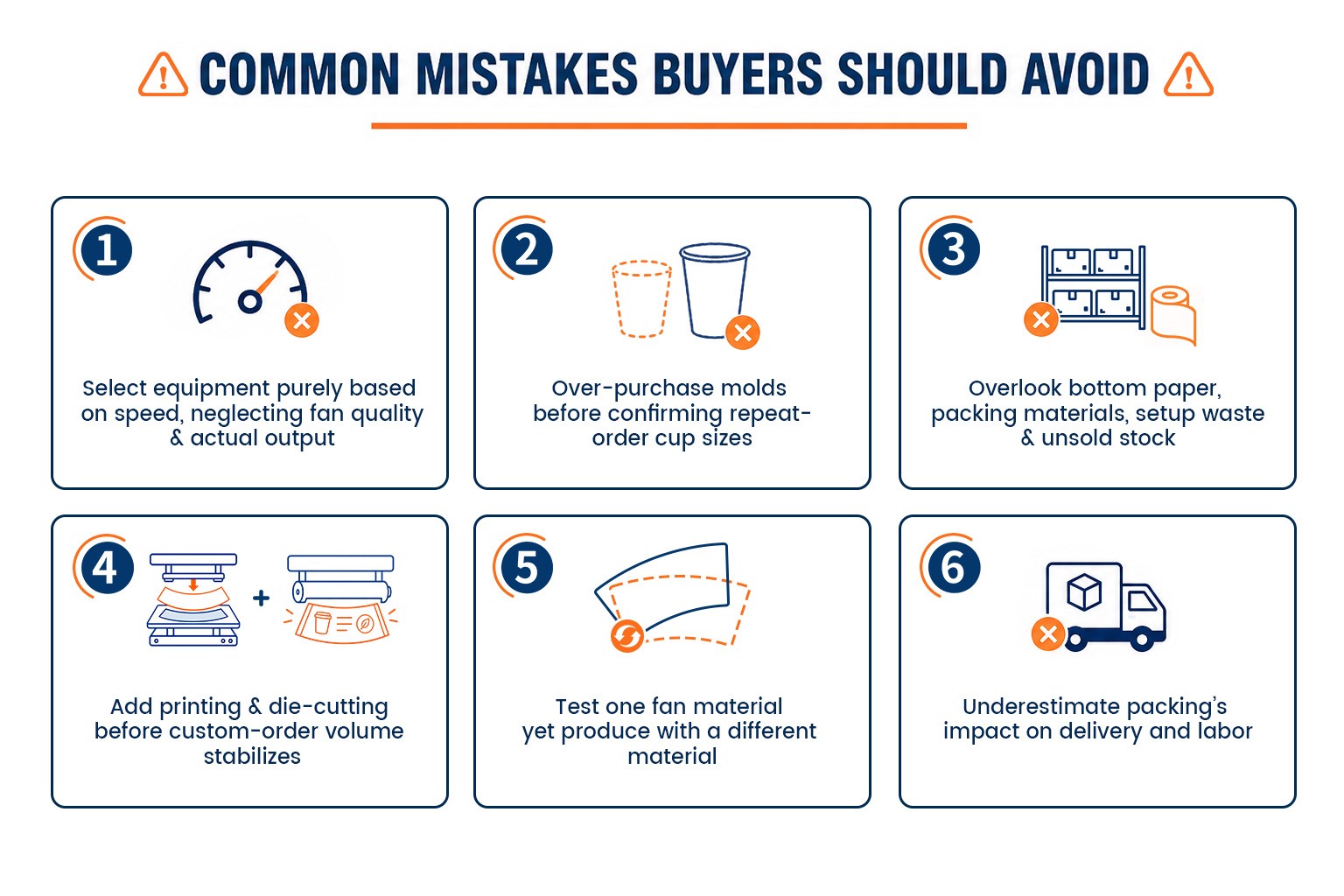
Common Mistakes Buyers Should Avoid
- Choosing equipment only by speed without checking fan quality and real packed output.
- Buying too many molds before the factory knows which cup sizes customers reorder.
- Ignoring bottom paper, packing material, setup waste, and unsold inventory in the cost sheet.
- Adding printing and die cutting before custom order volume is stable.
- Testing with one fan material but producing with another material after installation.
- Treating packing as a small final step instead of a major delivery and labor factor.
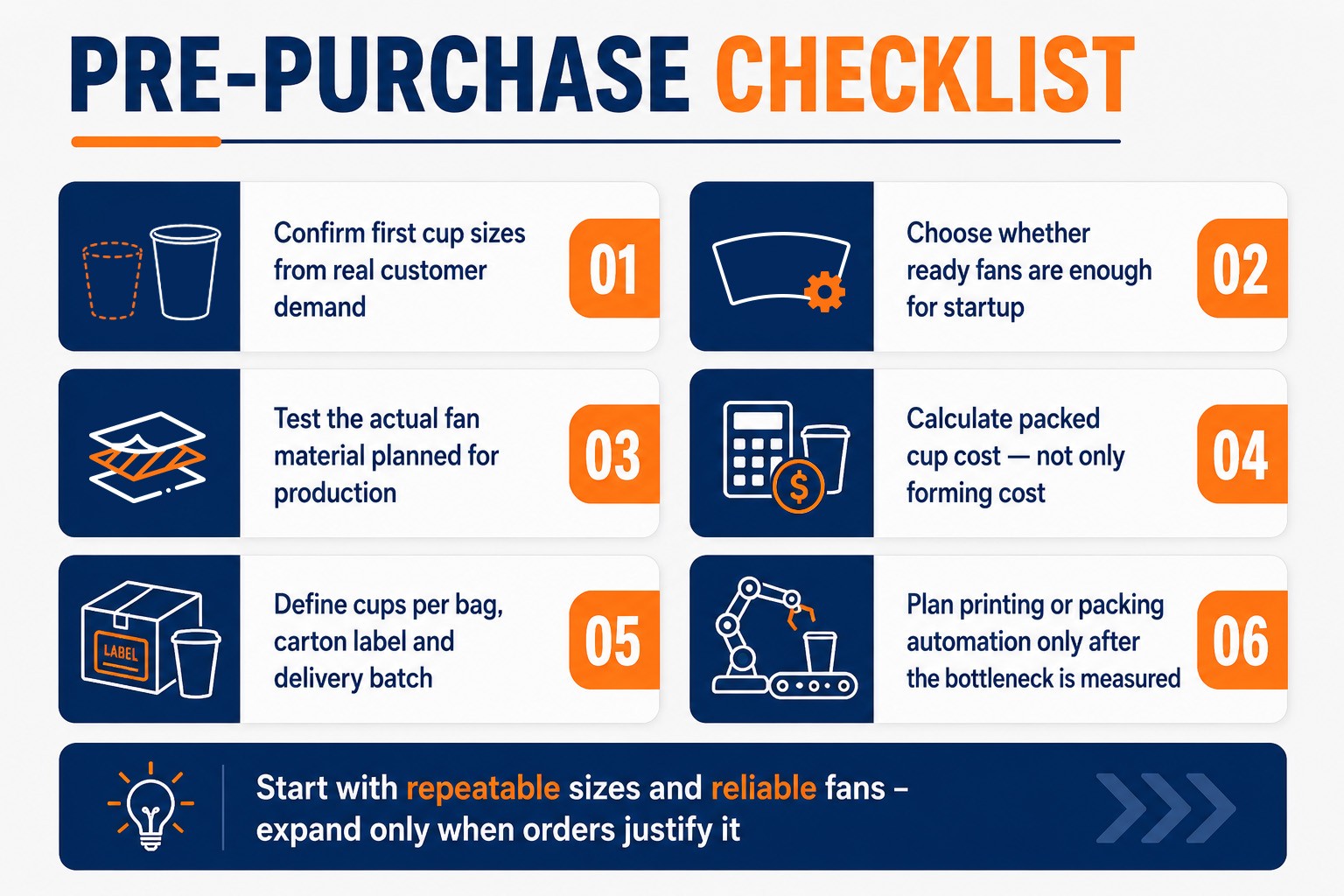
Pre-Purchase Checklist
- Confirm the first cup sizes from real customer demand.
- Choose whether ready fans are enough for the startup stage.
- Test the actual paper cup fan material planned for production.
- Calculate packed cup cost, not only forming cost.
- Define cups per bag, bags per carton, label rules, and delivery batch size.
- Plan printing, die cutting, or automatic packing only after the bottleneck is measured.
Frequently Asked Questions
What does cup machine making paper mean?
Most buyers use this search to find equipment that makes paper cups from prepared paper cup fans or coated paper material. The practical term is usually paper cup forming machine or paper cup production equipment.
Should a startup buy ready fans or make fans in-house?
Most startups should begin with ready fans if the supply is stable. In-house printing and die cutting make more sense after custom order volume and repeat demand are proven.
Why does fan quality affect machine performance?
Fan shape, coating, thickness, and cutting accuracy affect feeding, sealing, and forming stability. Poor fans can create rejects even when the machine is suitable.
What should buyers calculate before ordering equipment?
Calculate finished packed cup cost, including fan cost, bottom paper, labor, setup waste, packing material, handling, overhead, and expected reject rate.
When is automatic packing worth considering?
It is worth considering when manual counting, bagging, or sealing limits daily delivery or creates high labor pressure after forming output becomes stable.
The Bottom Line
A cup machine making paper project should be planned as a fan-to-finished-cup workflow. The buyer needs suitable paper cup fans, stable forming, controlled waste, clear packing rules, and realistic cost calculation before expanding equipment.
The best investment path is to start with repeatable cup sizes and reliable fans, then add printing, die cutting, or packing automation only when orders and bottlenecks justify the upgrade.
This approach keeps early cash flow focused on sellable cups instead of unused capacity.
Before purchasing, prepare your target cup sizes, paper cup fan strategy, material samples, finished cup cost sheet, packing quantity, and first-order test plan. This makes machine selection more accurate and helps the factory build production around profitable, repeatable orders.





 Tel: +86-13362708280
 Email: george@paper-cupmakingmachine.com
 MP/WhatsApp: +86-13362708280
 Manufacturer Address:No.1588, Huaming Road, Feiyun Street,Ruian City Zhejiang Province -325200 China